Hay at Idlewind Acres
Shop this department ↓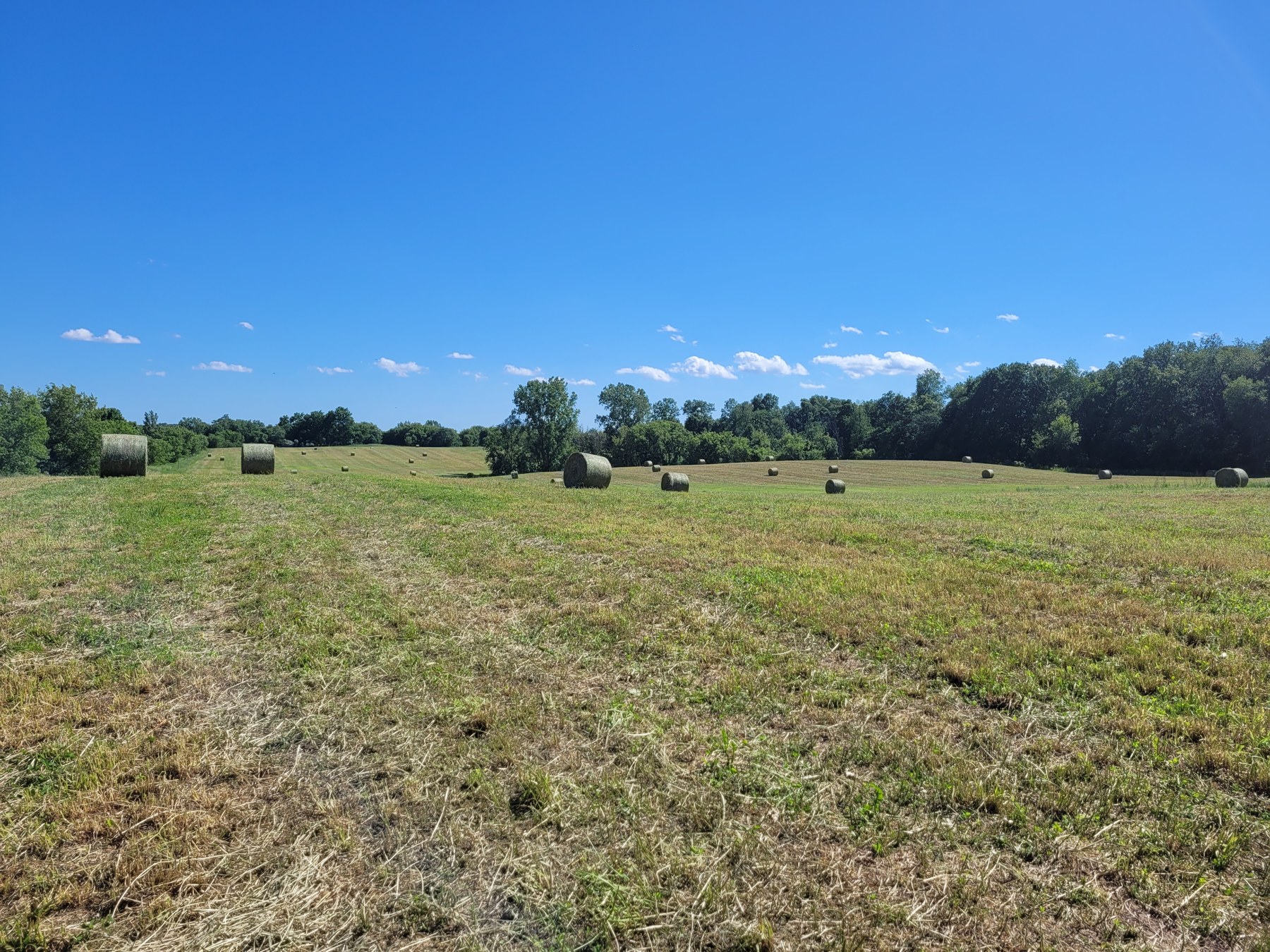
From Corn to Hay
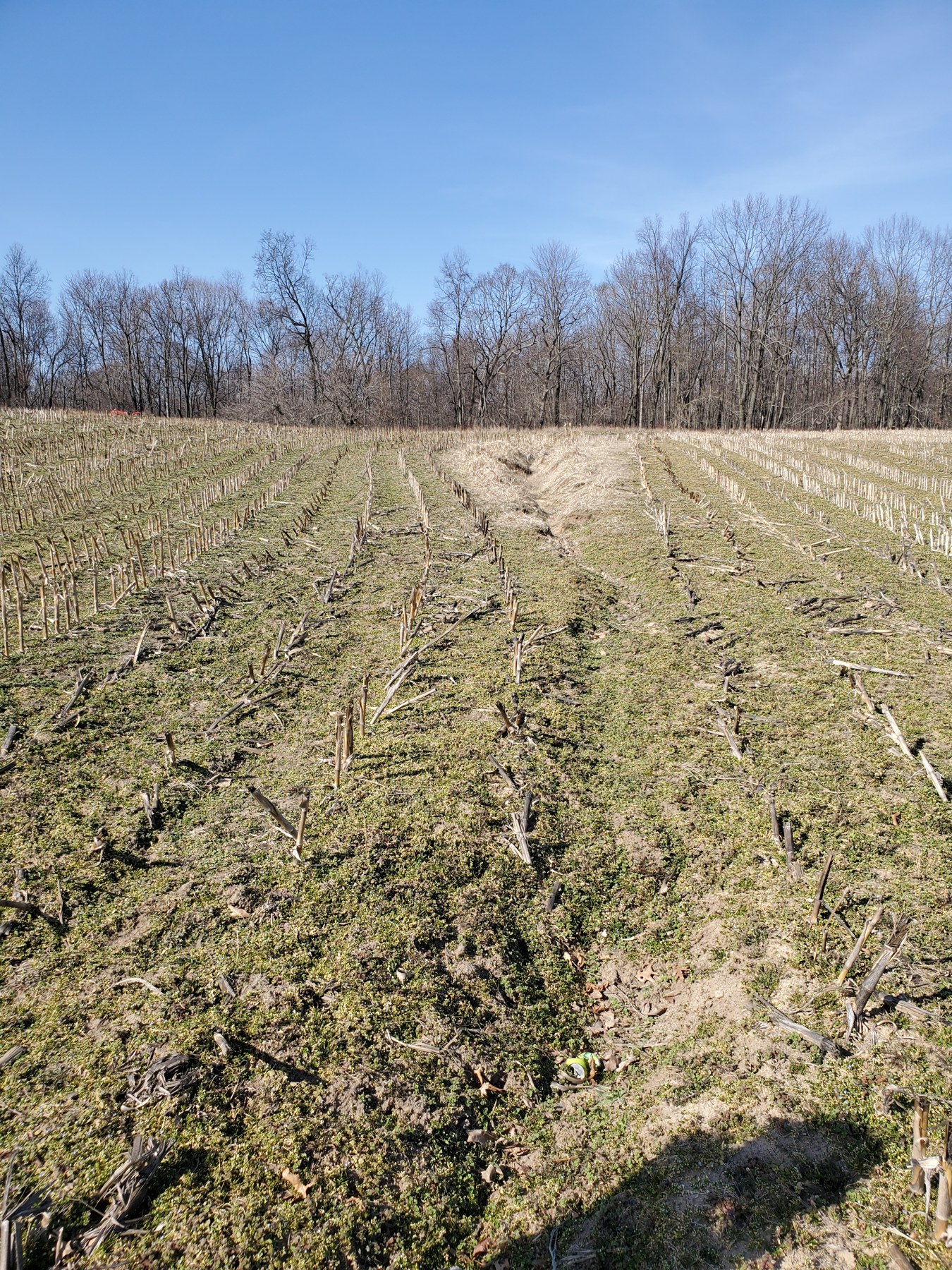
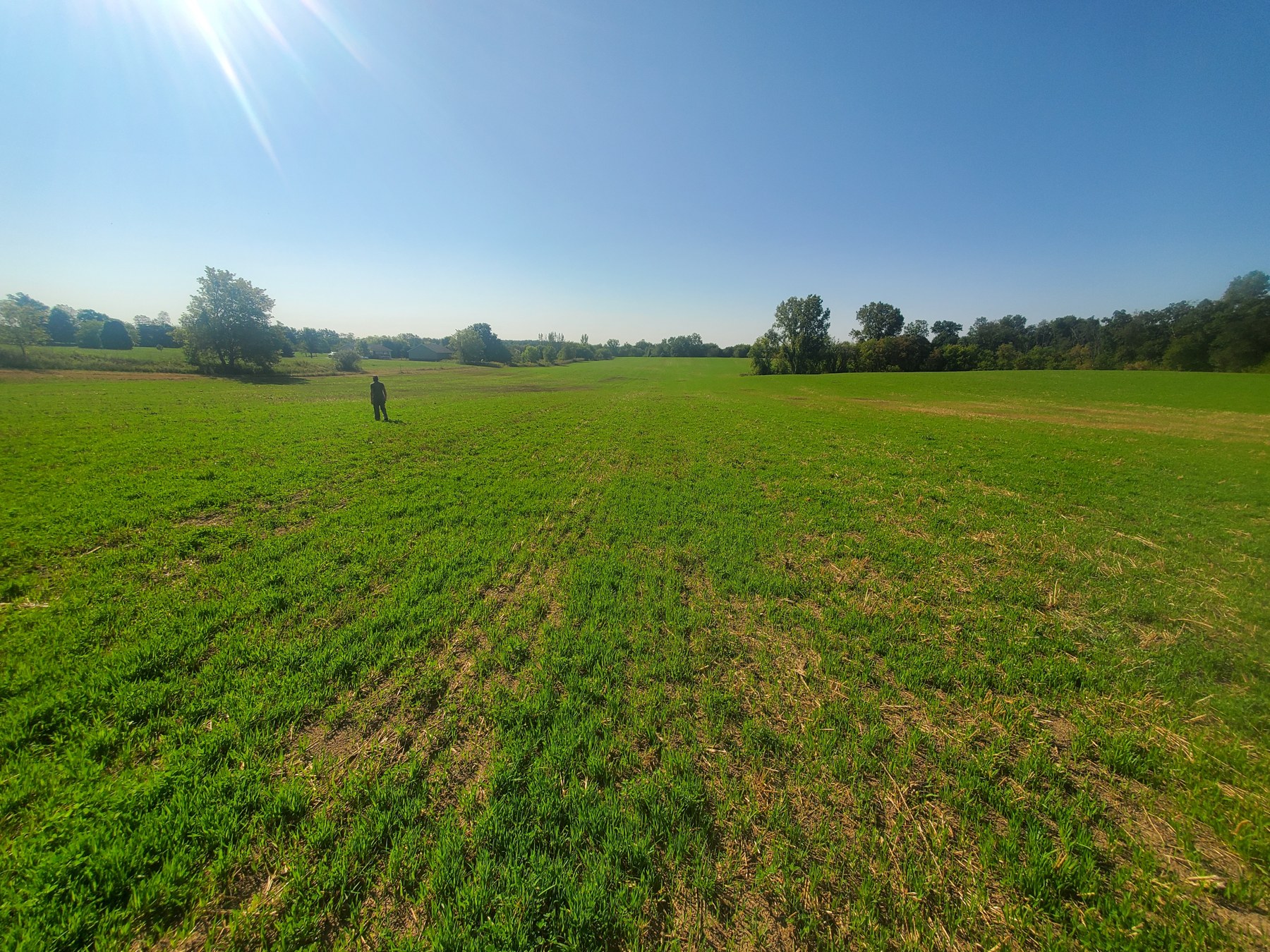
When we bought our farm, the Back 30, which is about 28 acres of field and 2 acres of wooded perimeter, was planted in a corn / soy rotation. The soil was very sandy and lacked structure from repeated tilling and chemical fertilizers.
One of the reasons we loved the land was the topography. The gently rolling hills really set it apart from the flat expanses of farmland that is better for annual crops. But those hills, combined with the very sandy soil, caused significant runoff and erosion. We even had a section that became a sinkhole!
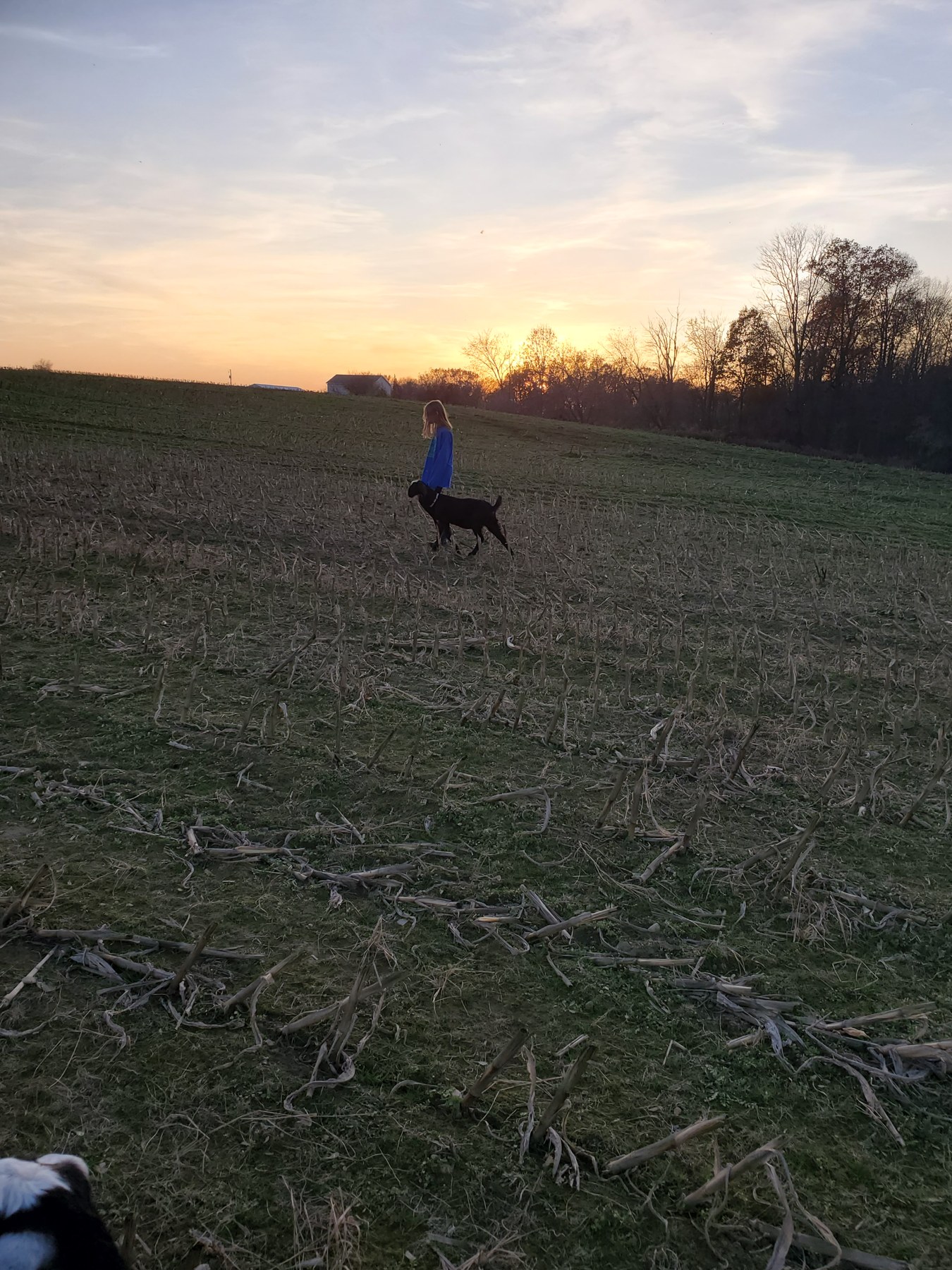
We walked the field daily with Fawn and Yara, our first two goats, who were just babies at the time.
We did not till before seeding our hayfield. We thought there had been enough tilling, and we knew the corn stalk remnants would decompose and give back to the soil. We seeded with a mix of alfalfa and timothy. It was so exciting when the grass began to grow in the spring!
Our First Season
We have the best neighbors you can ever imagine. They are seasoned farmers, and are more than willing to be our teachers and mentors. They walked us through our first hay season, and actually baled our hay for us because we did not have a baler yet.
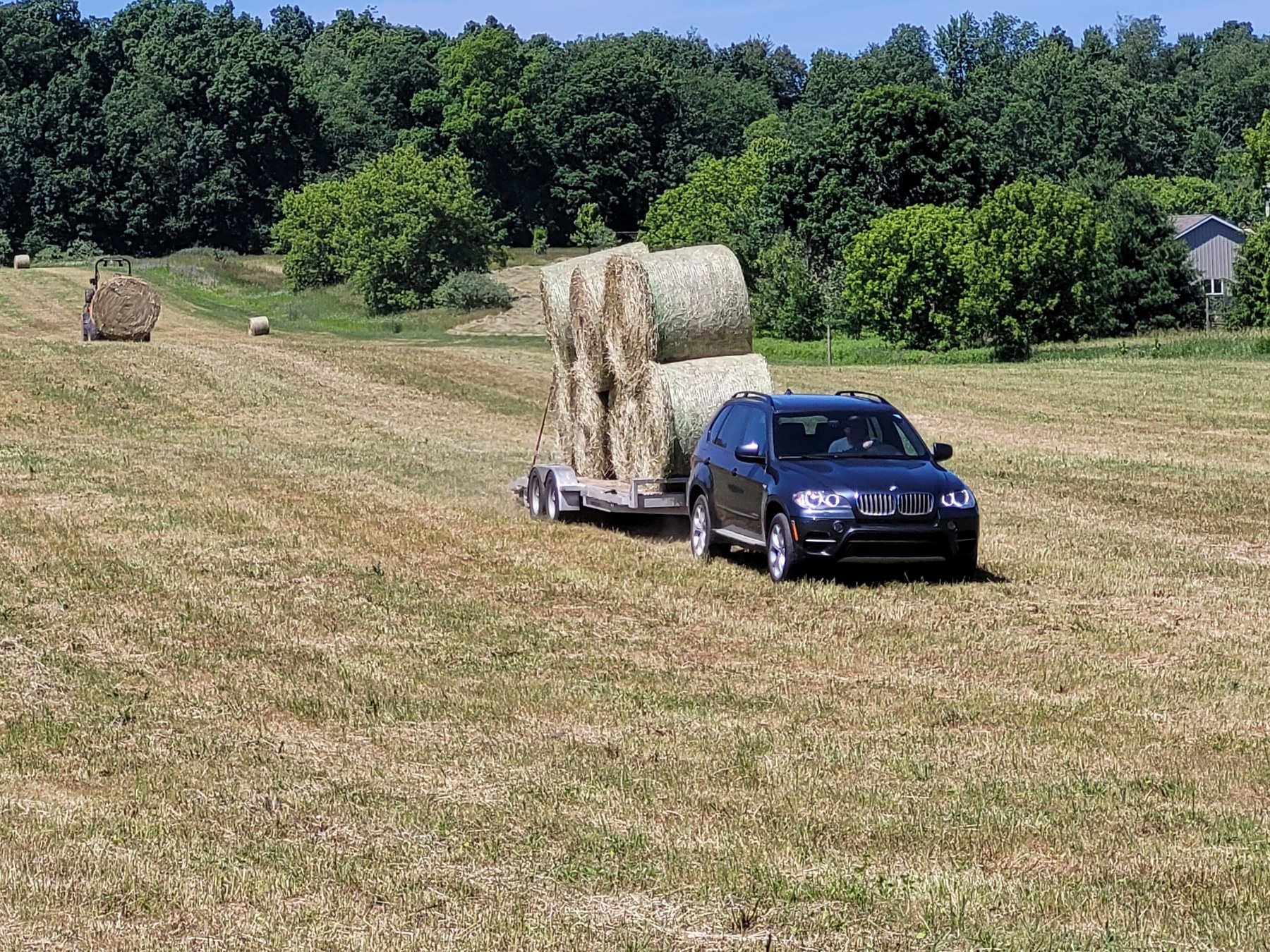
The first tractor we bought was also way too small for the job. To get the bales off the field efficiently, the tractor loaded bales onto a wagon pulled by...our BMW X5 diesel! The BMW could haul six round bales while the tractor then brought in another two. It took many trips to get all of the bales from the field to the Big Barn where they were stored.
The field that first season was very weedy, but I wasn't worried. When we first bought the farm, our USDA representative came out to visit. This is a free benefit that is offered, and I highly recommend it! She walked the property with me, listened to my ideas, and offered insight and advice from her decades of experience.
She saved me a lot of money by telling me that the area where I wanted a pond would never be more than 2 inches of water without putting a lot of money into significant alterations. And she told me not to worry about weeds: "Just keep cutting. Grass loves to be cut and weeds hate it. Over time, the weeds will disappear."
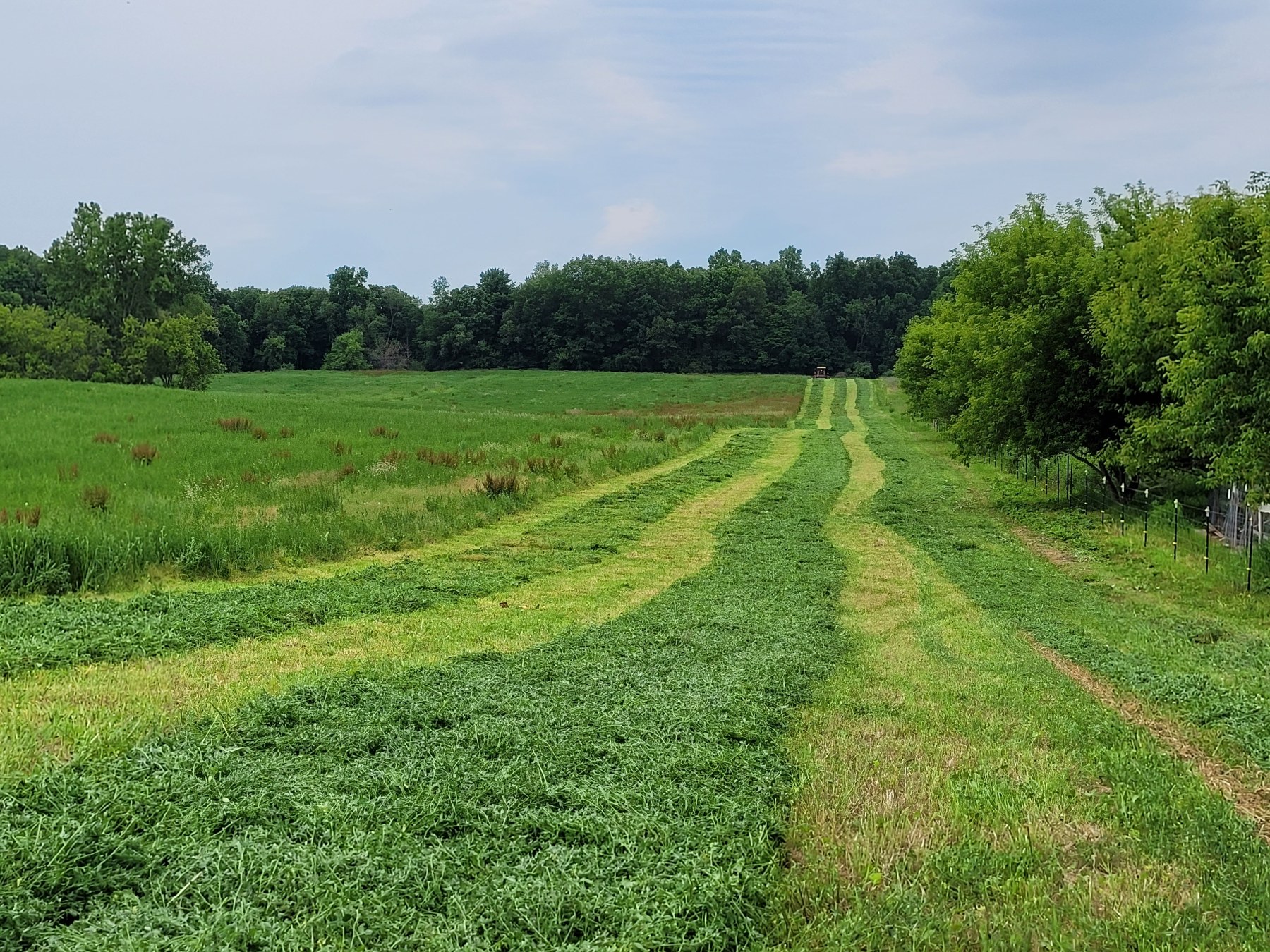
She was right! The weeds dramatically decreased after just the first season. A huge area that had been dock and a swampy mess became grassy and the water drained away (or was used by the grass, I suppose). Now, five seasons later, the field is pretty much weed free!
Making Hay
Over the past several years, we sold our first too-small tractor and bought a brand new, larger model. Then my husband, as men tend to do, decided he needed an even bigger tractor. So he bought the first "antique tractor." He then decided that was too small, and bought a second antique tractor. He then decided he needed a tractor with an enclosed cab and air conditioning, so he bought yet another tractor.
Wisely, he sold the small antique tractor before telling me about the new purchase! I always joke that he has made our yard look like an auction! (I am actually not sure if I am joking...)
In addition to the tractors, we have acquired all of the equipment needed to make hay ourselves. But it seems one thing or another is always broken, so we still rely on our neighbors quite a bit!
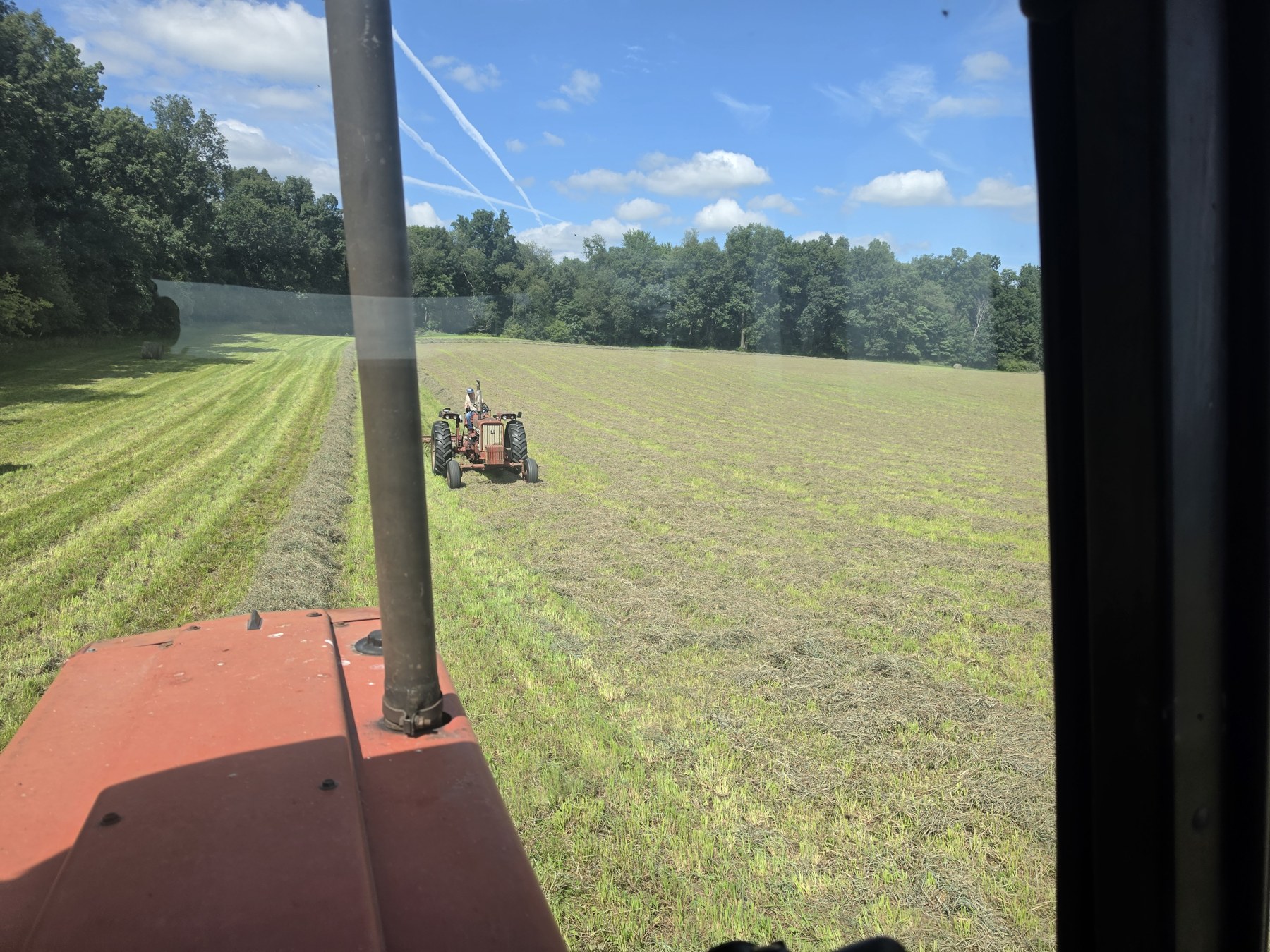
We make hay three times a year. I keep trying to convince my husband to do a fourth cutting, but it is a gamble to do so in Michigan because the weather is too unpredictable to ensure it dries sufficiently before it can be baled.
So this year, for the first time, we are going to do "chop." This is cutting the grass, which is quite tall, and instead of letting it dry, a special machine shoots it onto a wagon. The wagon will then be drawn into the Cow Pasture where the cows can munch on it.
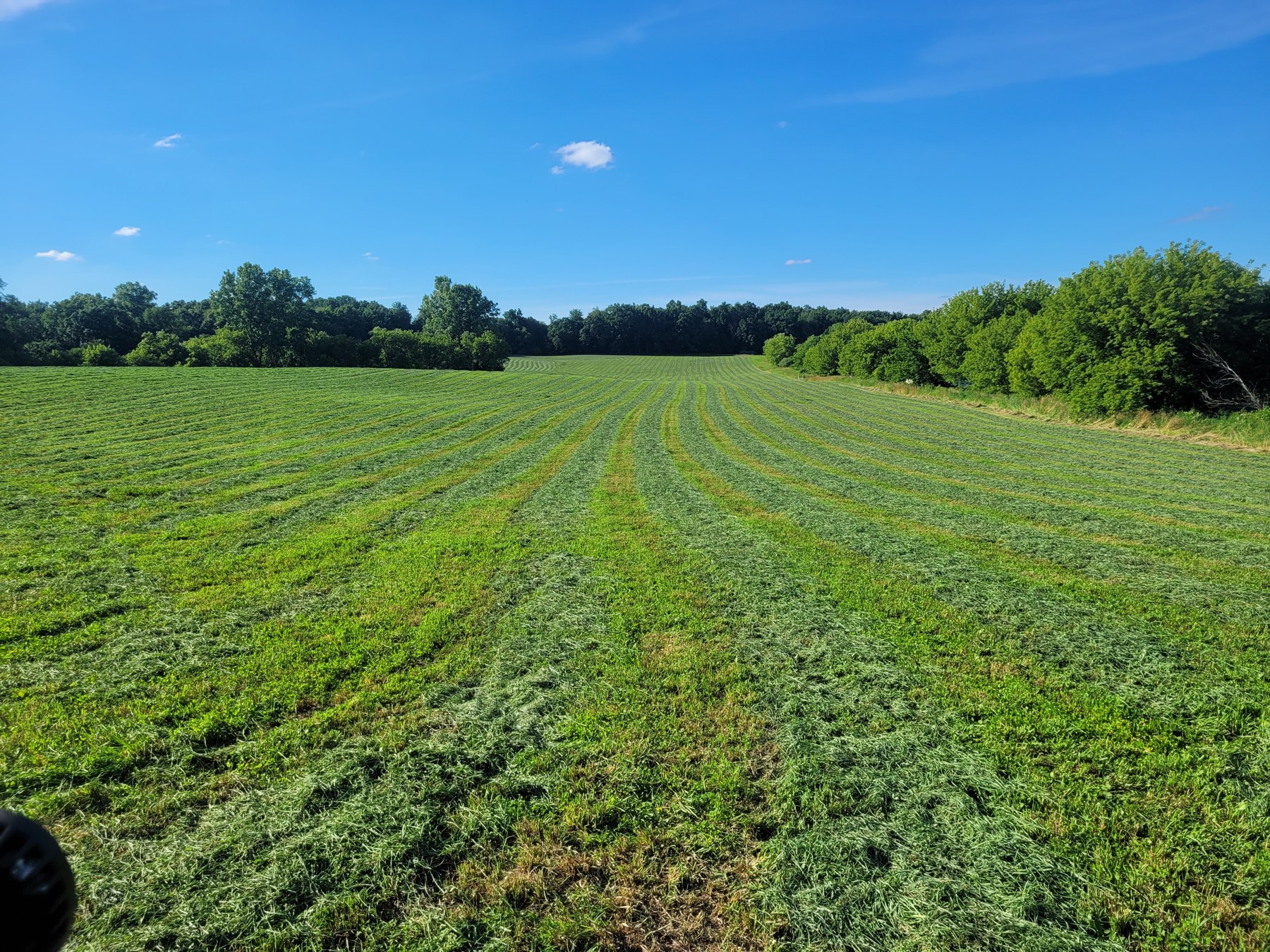
Generally, though, the grass is cut. It looks just like grass clippings left on a lawn, only much thicker and longer. Once the grass is dry on top, another piece of equipment, called a tedder, moves the grass around so that the underside is exposed and can dry.
Next, the grass is raked into rows called "windrows." Then the baler lifts the hay rows, compresses them to a defined size, applies baling twine, and shoots the bale out the back. This is the same process for both round bales, which we feed the cows, and square bales, which we feed the horses.
We are very fortunate that two of our neighbors with very large yards that do not farm or have animals allow us to hay their acreage. This adds about eight acres that we use solely for small square bales for the horses. This is pure grass hay with no alfalfa. They eat this ten months a year. In January and February, I give them the alfalfa hay to help them maintain their weight.
Bringing in the Bales
I'm pleased to report that my BMW has been retired from field work and the large tractors now have the job of hauling the hay wagons. The round bales are released from the baler onto the ground. Our one non-antique tractor scoots around the field lifting the round bales with a bale spear and lifting them onto the hay wagons. The antique tractors then haul the hay to the Big Barn where the bales are again speared and placed in the barn for storage.
The small bales are much, much more work, and a testament to the importance of feeding our horses organically grown hay.
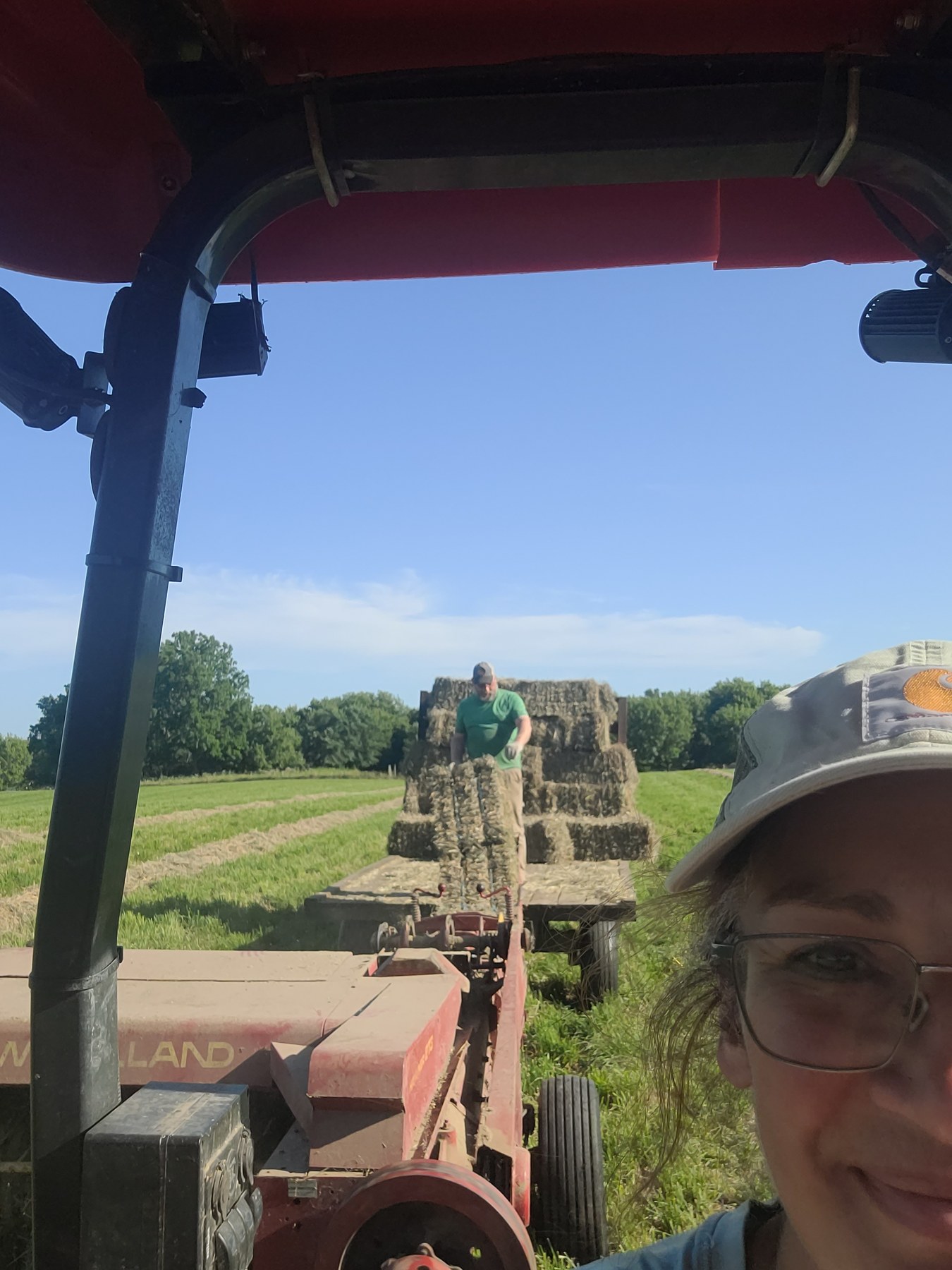
With square baling, the baler is attached to the tractor and the hay wagon is attached to the back of the baler. Someone stands on the hay wagon to catch and stack the bales. The bales are heavy, and this is very hard work. It is also done in the dead of summer, so it is always very hot, sweaty, dirty work.
Lucky for me, my job is driving the tractor! (I used to stack the bales, but I was very bad at it. We spent too much time picking up dropped bales.)
Not Just For Hay
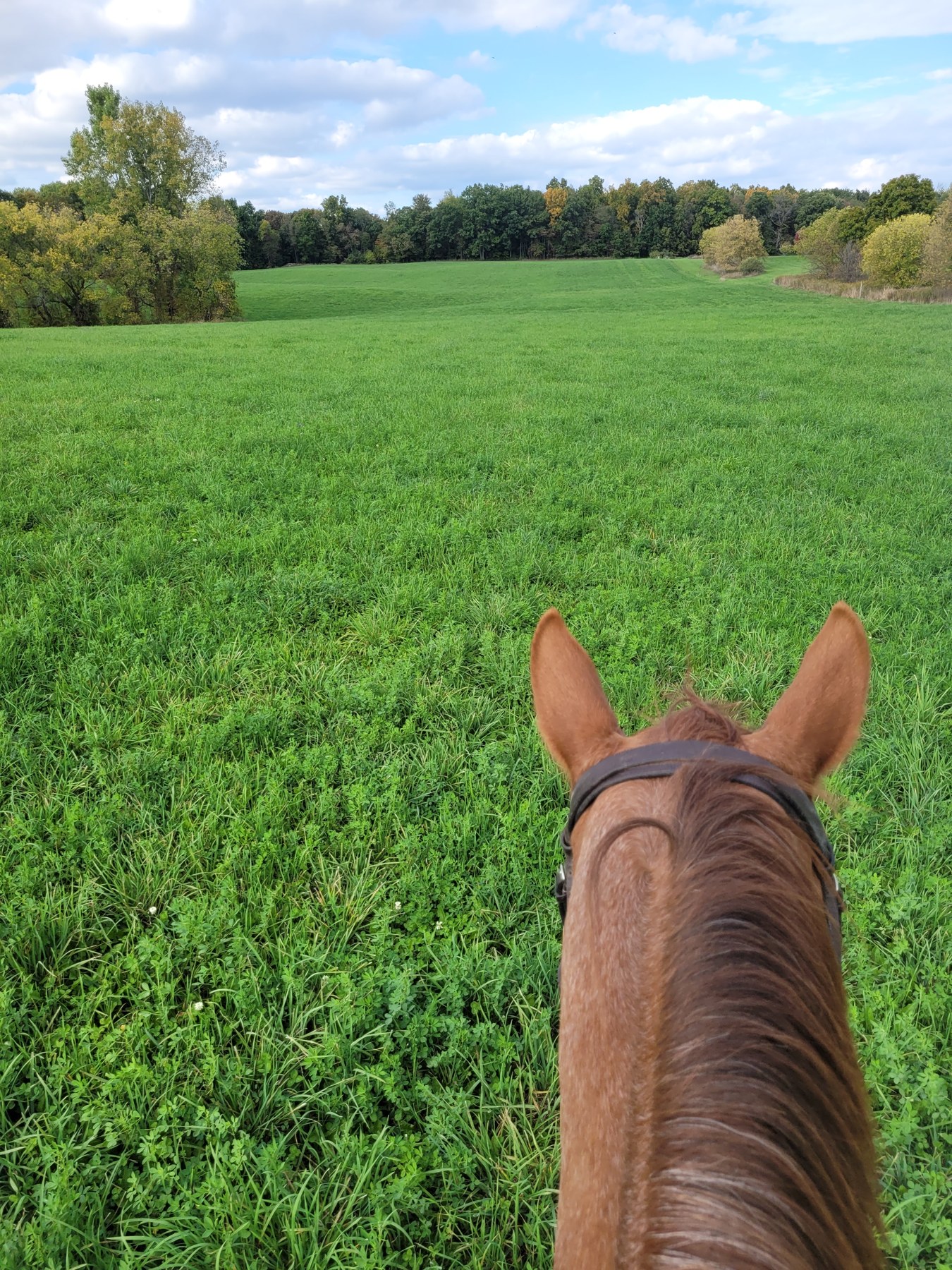
The field has uses other than hay! Rowan loves hacking out and going for a walk around the field. And cantering up the hills is excellent exercise for him! It also helps desensitize him for trail rides in unfamiliar locations—you never know when a turkey or rabbit will jump out!
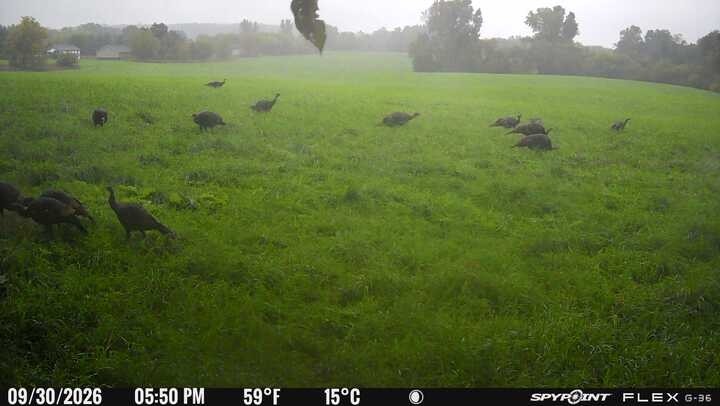
The field provides food for all sorts of wildlife. Turkeys, deer, raccoons, rabbits, and foxes are commonly caught on our field cameras.
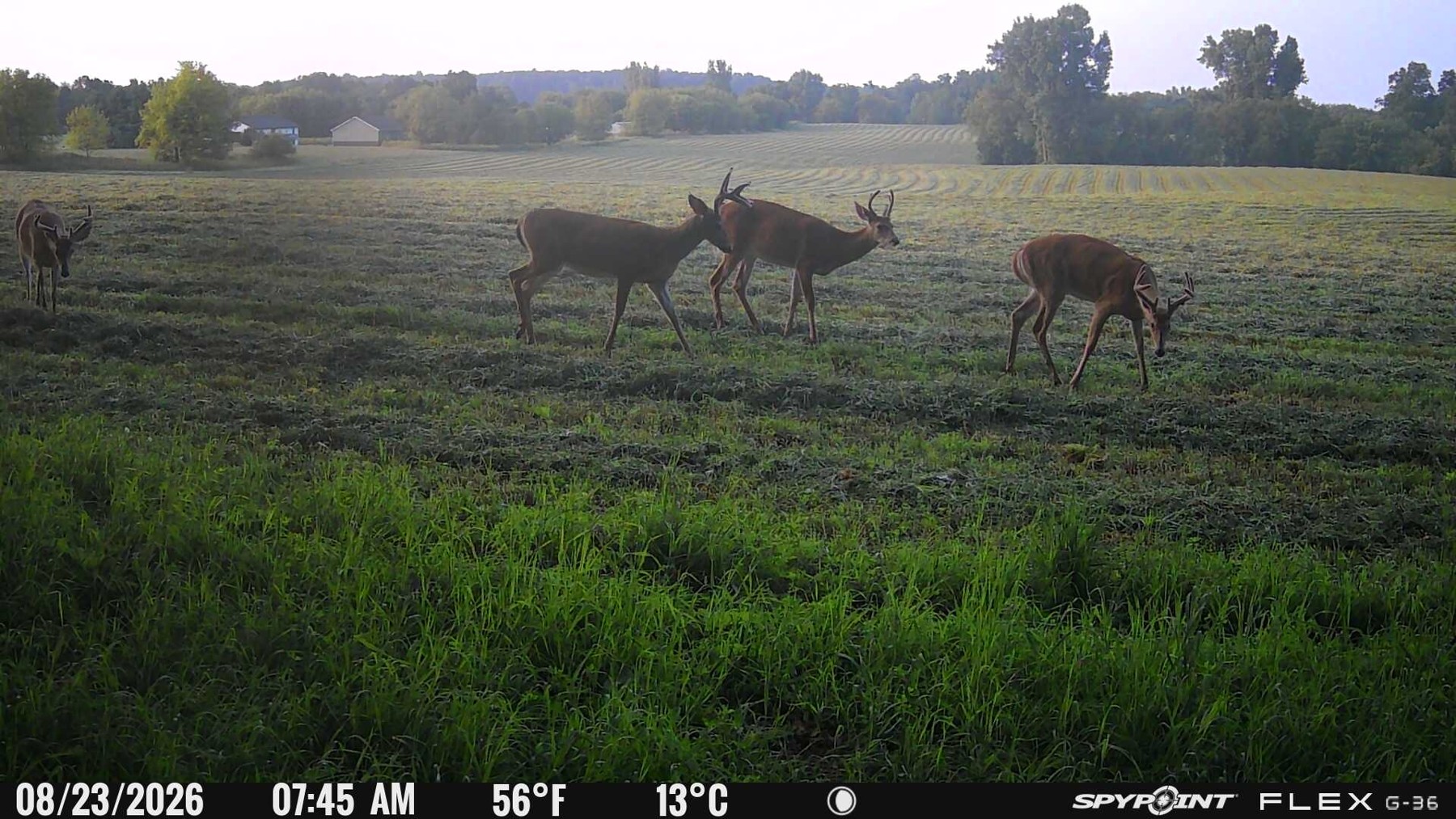
The Back 30 has become much more than a hayfield. It feeds our animals, gives Rowan room to stretch his legs, and welcomes plenty of wildlife. It has also given us a lot to learn—and, apparently, plenty of reasons to buy another tractor.