Meet Our Red Poll Cattle
Shop The Barnyard ↓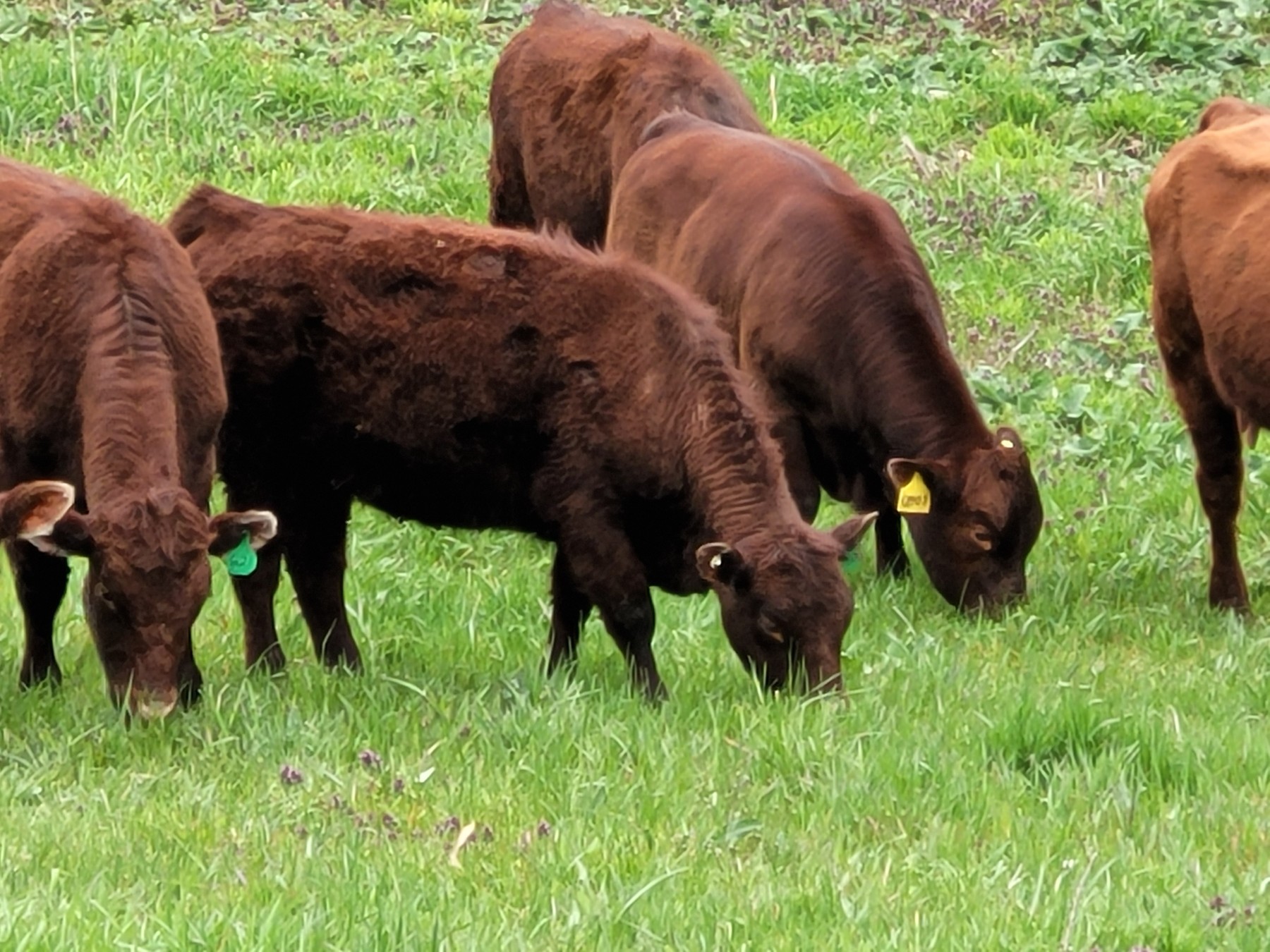
Red Poll is a heritage breed, meaning the breed developed before the rise of industrial agriculture. We chose this breed both for its unique characteristics and because we wanted to be part of something bigger. They are considered a “threatened” breed, and the breeds from which Red Polls were developed are both extinct. We love being part of a small community of breeders that work to spread the word about this versatile breed and increase their numbers while also providing high quality beef.
Their docile nature also makes them ideal for beginning farmers like us!
Red Poll: The Best Breed You've Never Heard Of
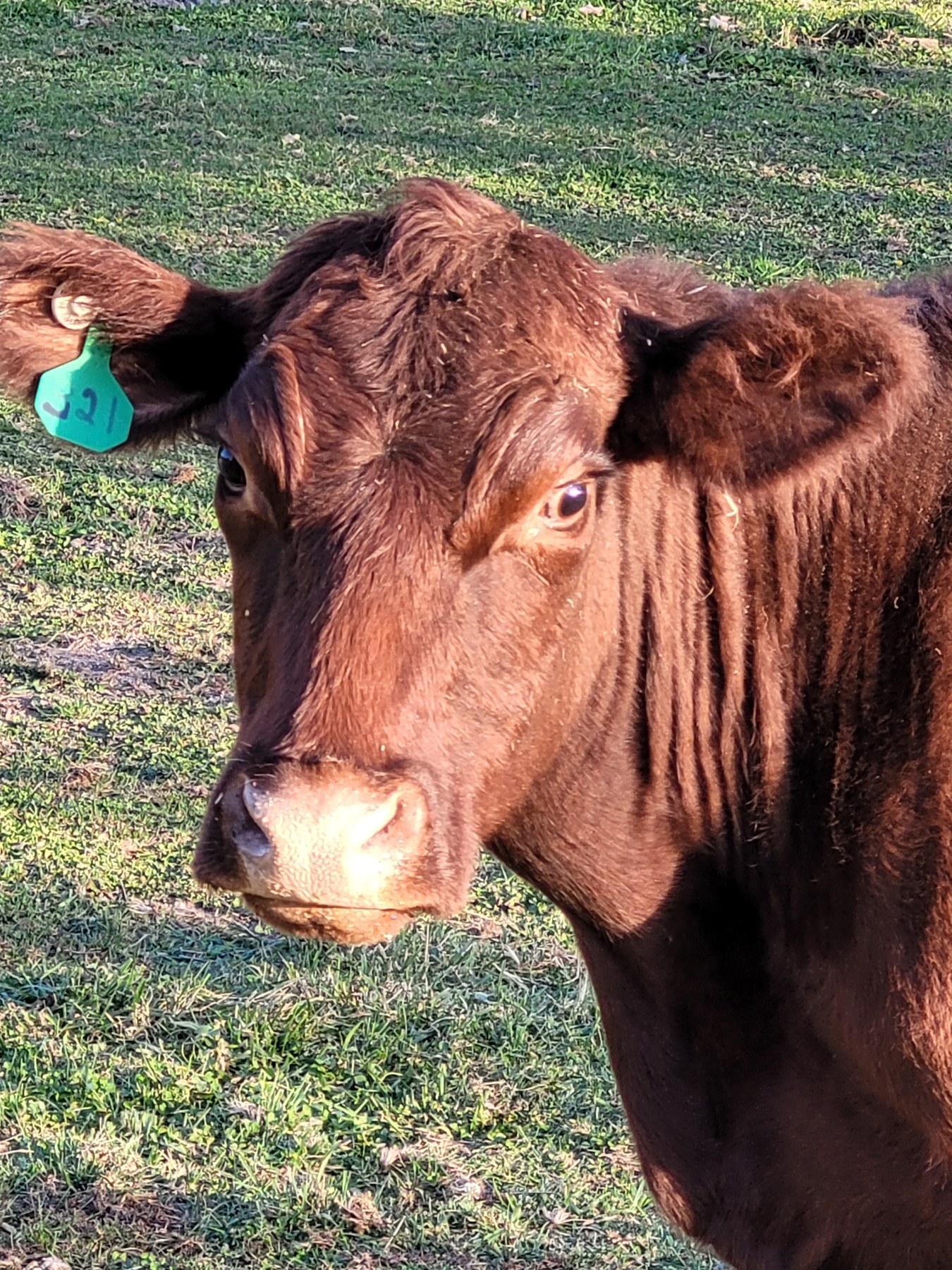
The Red Poll breed developed in eastern England in the early 1800s. The breed brought together two local cattle types from the neighboring counties of Norfolk and Suffolk. Norfolk cattle were valued for their beef, while Suffolk cattle were known for their dairy qualities and naturally hornless heads. By combining the two, breeders developed the red, hornless cattle we know today. The name describes those defining features: “Red” refers to their coats, and “Poll” means they are naturally without horns. [source]
Red Polls were bred to provide both milk and beef. That combination made them a practical choice for farmers who wanted both from the same herd. Red Polls are categorized as a beef breed in the US, [source] but cows can produce around 10,000 lbs of milk a year! [source]
Red Polls first came to the United States in 1873. Three hundred breeding stock were imported between 1873 and 1900. More than 6,000 were registered annually during the 1920s. [source] The Livestock Conservancy lists Red Polls as Threatened. [source] That category describes breeds with fewer than 1,000 annual registrations in the United States and an estimated global population of fewer than 5,000. [source] This is in part because of crossbreeding programs. [source] I don't think there is anything wrong with cross-breeding (after all, that is how the Red Poll came to be!), but I do think it is important to ensure the breed is preserved.
Red Polls aren't the only heritage breed we manage at Idlewind Acres. Our Berkshire hogs and Katahdin sheep are heritage breeds as well!
Bringing Our First Cattle Home
We started our herd with two cows that had calves with them (Pearl and Ruby) and two heifers (female cattle that have not yet had a baby) from their same herd. These four came from Arkansas. We bought four more heifers from a farm in Missouri. We merged them together after a quarantine period.
I was worried that our Southern cattle would have trouble adjusting to our Michigan winters, but they did just fine! They developed nice, thick winter coats and are so well-insulated that the snow rests right on top of them without melting!
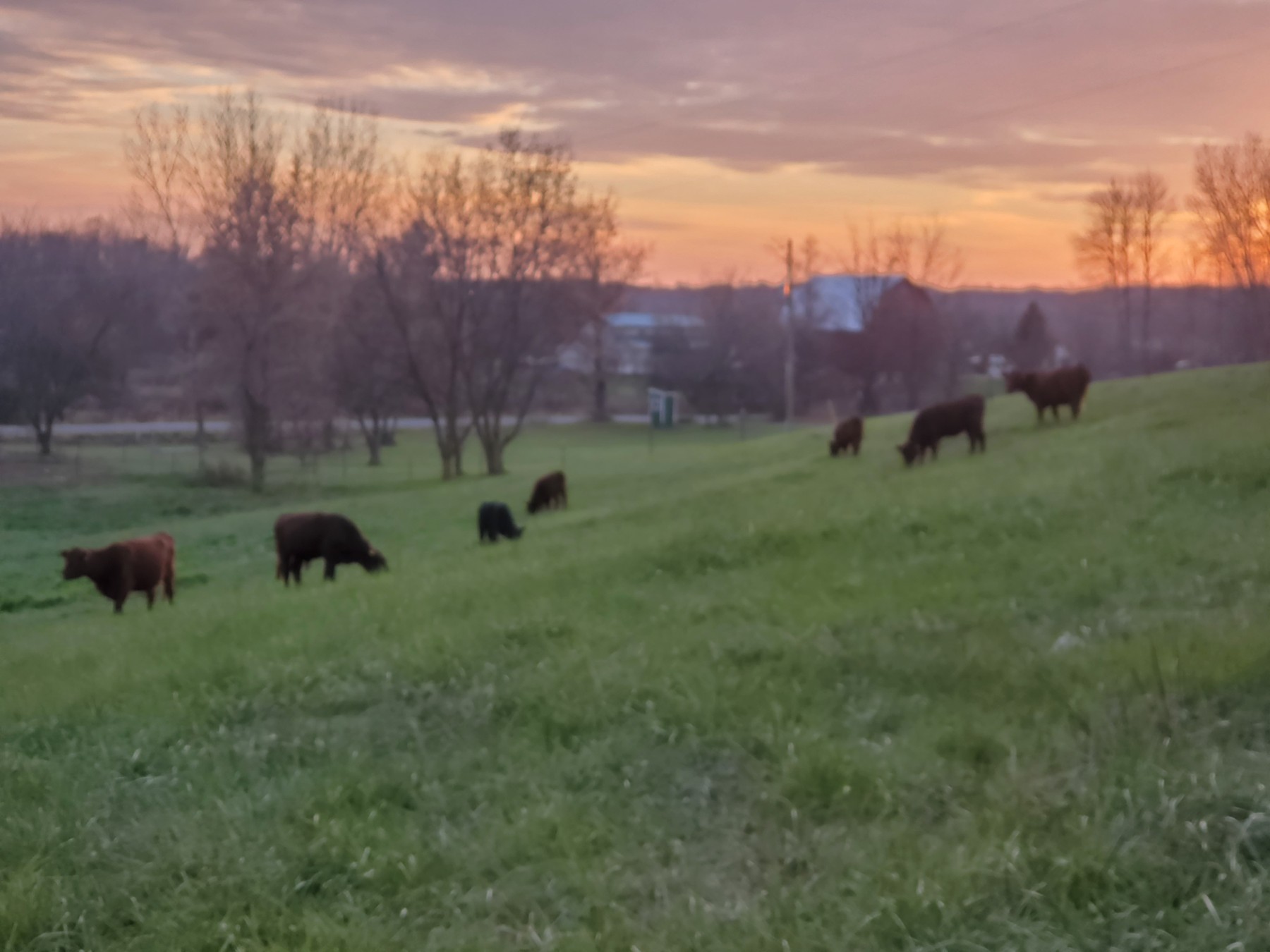
Our cattle always have access to shelter. The west third of the Big Barn is dedicated to two cow shelters. The Lower Cow Pasture has access to the south side of the Big Barn, and the Cow Hill Pasture has access to the north side of the Big Barn. Nevertheless, even in winter, everyone usually prefers to be outside.
We bought our first bull, Taurus, from a breeder in Ohio. I was always a little afraid of him, but he never gave me reason to be and was always quite docile. He was, however, impossible to keep away from our cows. When he first arrived, he was quarantined in the Lower Pasture and barn area. His very first night, he broke through our fencing and gate to reach the cows!
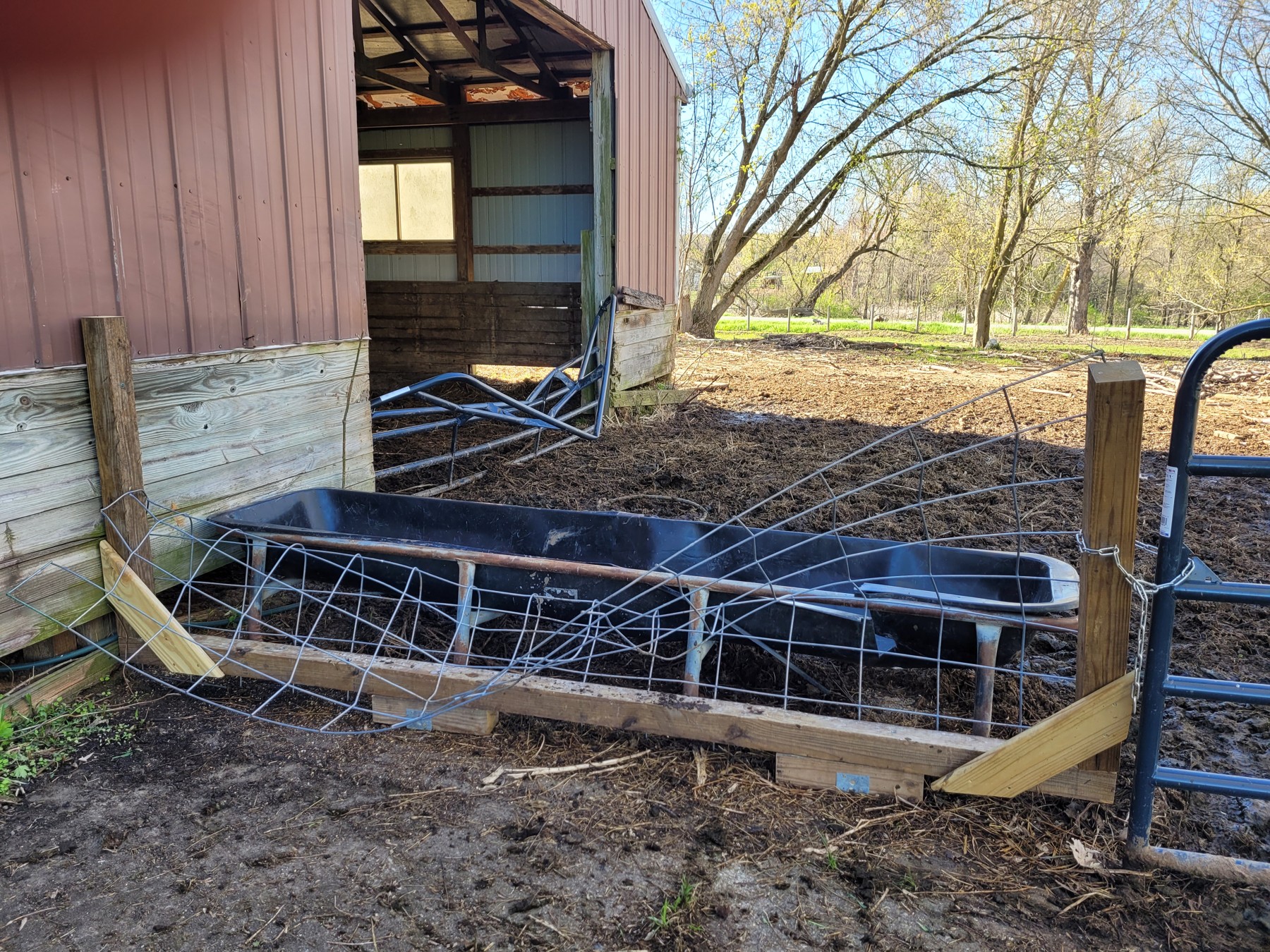
After that, we were never able to keep him separated, so our neighbor bought him from us. We took a season off from breeding and are now looking for a bull or at our artificial insemination (AI) options for 2027 calves!
Herd Dynamics
I have unexpectedly, but very happily, learned a lot about herd dynamics since starting Idlewind Acres. The cows, sheep, goats, and horses are all herd animals. All of the herds share some similarities and have some differences. For example, everyone in each herd eats and rests at the same time.
The cows have some very cool herd dynamics. There is a boss cow—ours is named Pearl.
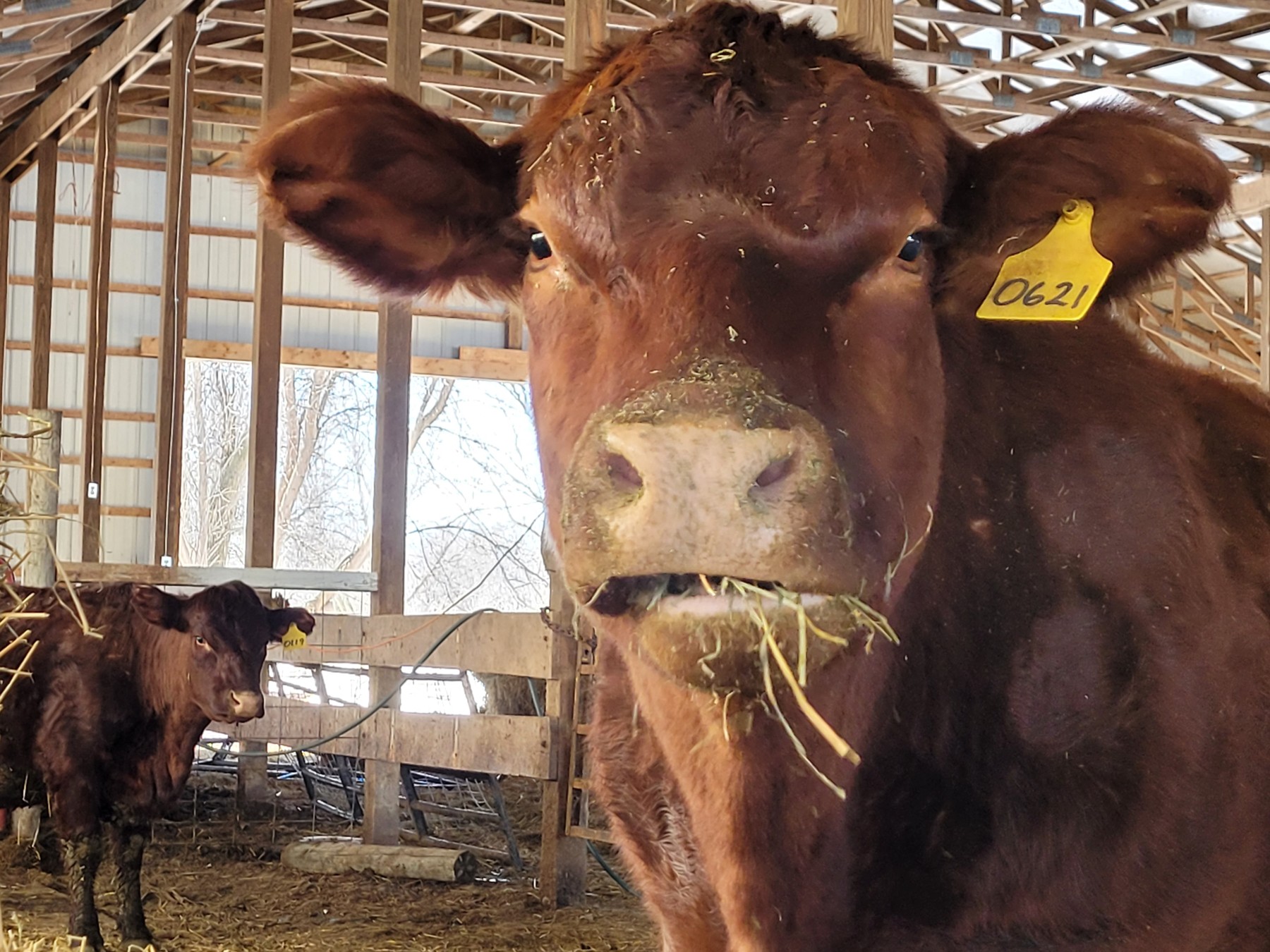
Pearl is one in a million (or maybe she isn't...after all, she is our first Boss Cow). She is very tame, and lets me pet her and snuggle with her. I tried riding her once, but she walked away when I tried to get on.
Pearl decides when everyone eats, drinks, and sleeps. She even helped us load a steer into a trailer once! Whenever I need the herd to go somewhere, I just go give Pearl a few pets, and then she will follow me and the herd follows her.
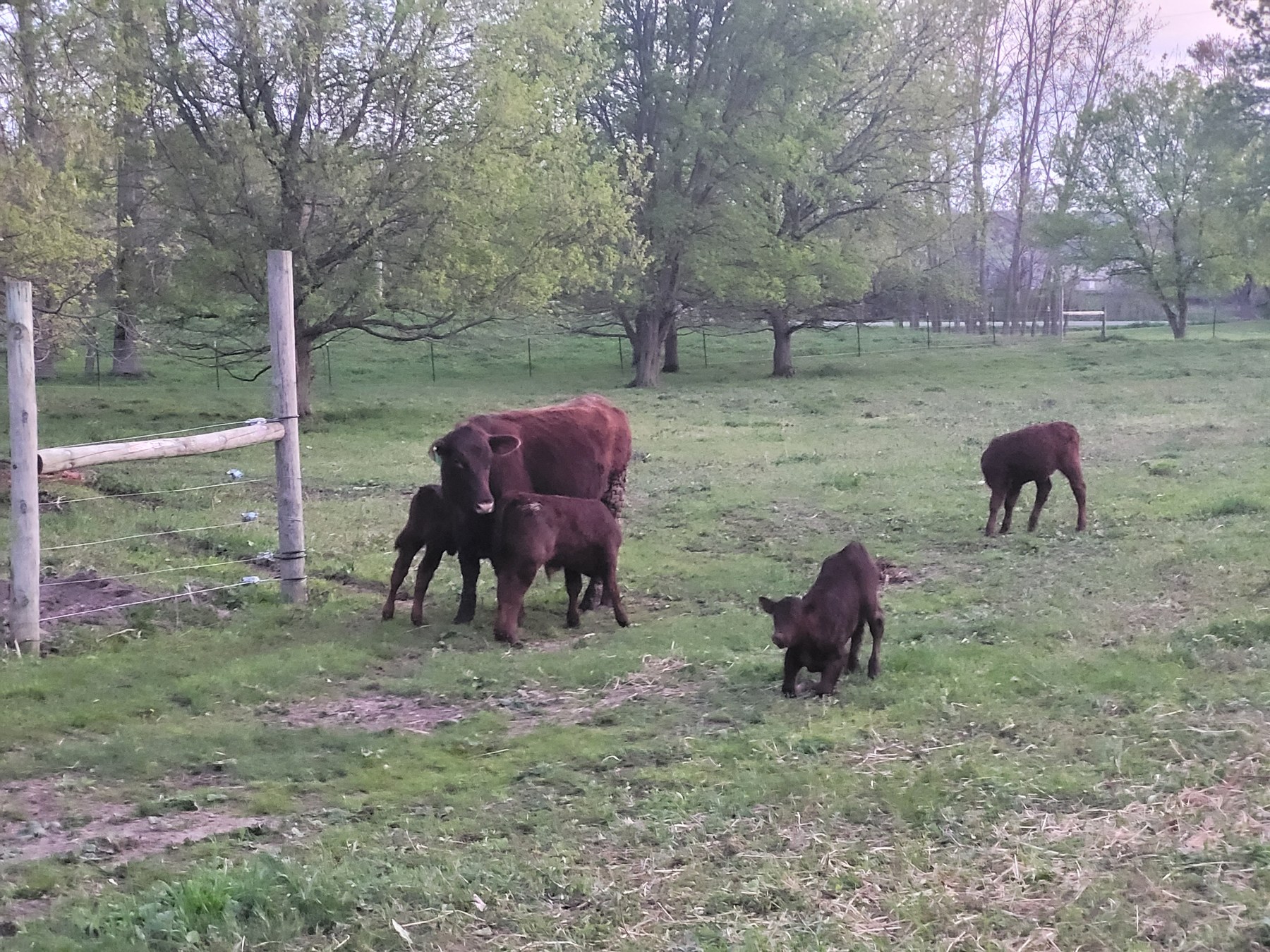
Red Polls are great mothers. When the babies are first born, they stay by their mothers' sides for a time. Little by little, each mother allows her baby to spend more time away from her. The babies will then play together.
We call our babies the Baby Brigade. The Baby Brigade has its own herd dynamic, including a little leader. The babies play until their mamas call them back to eat or rest.
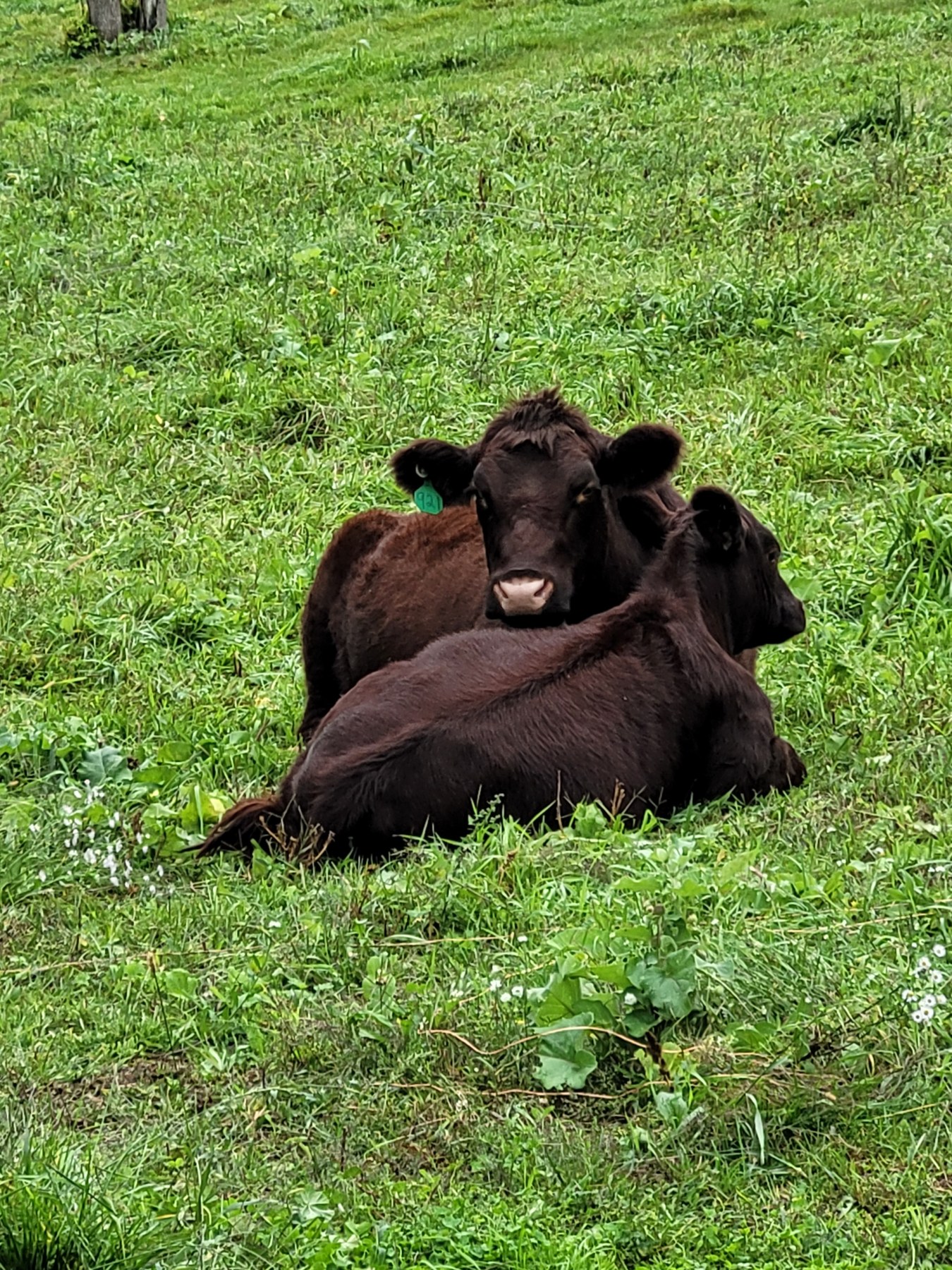
When the babies are a little older, the herd will go graze, but leave the babies behind. One mama stays behind to babysit. In this photo, the babysitter let another cow's baby have a little milk while waiting for the herd to return.
Calves and the Next Generation
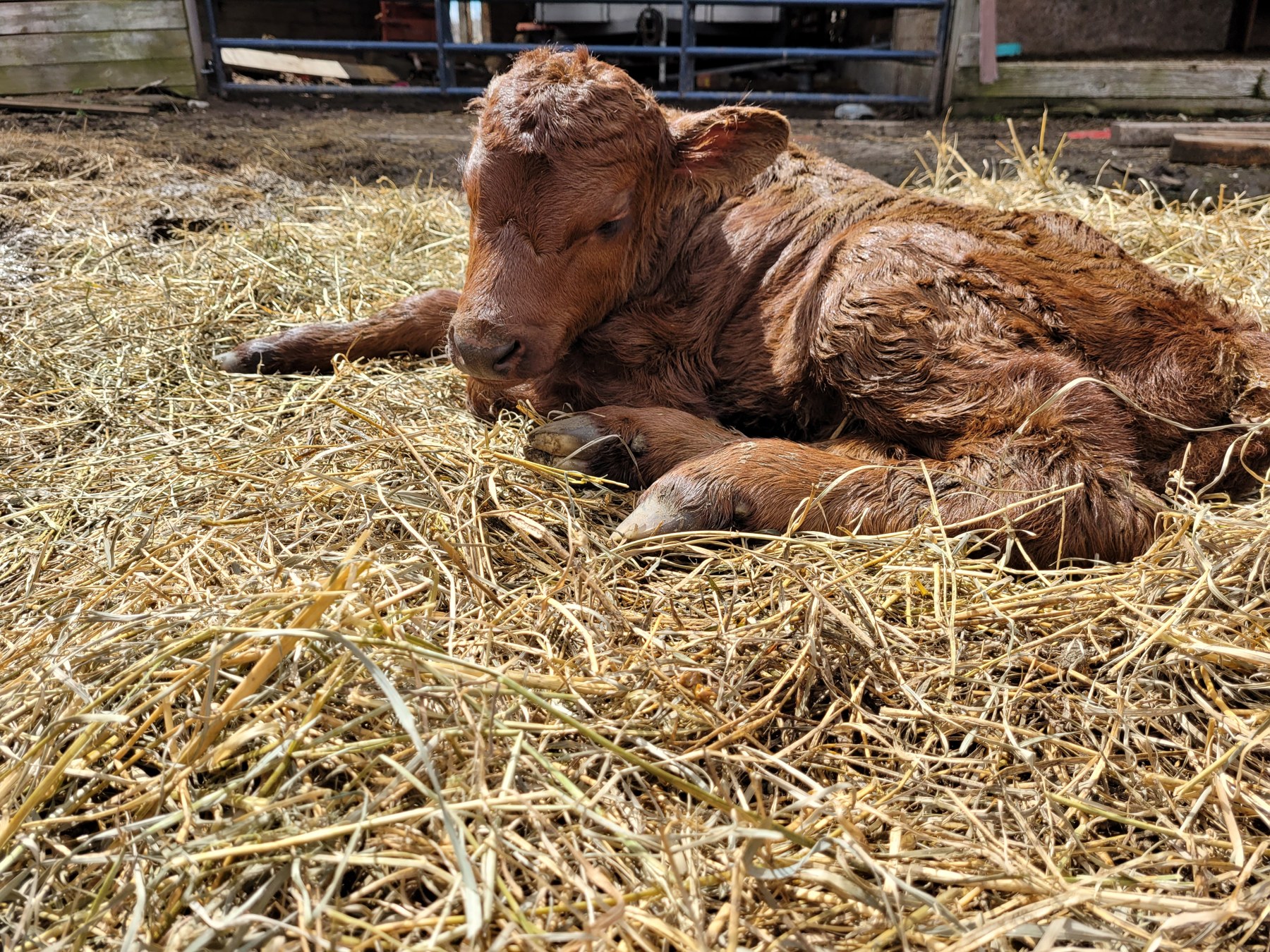
One of my favorite aspects of farm life is welcoming babies into the world! Red Polls calve (that is what it is called when a cow has a baby) very easily. We have only had to intervene twice, and those were both first-year heifers that should not have been bred—that happened when Taurus broke free.
Otherwise, we just get to watch and admire. When we expect a cow to give birth, we try to move her into an area we call the “Maternity Ward.” The Maternity Ward is a section in the Big Barn covered in a deep bedding of straw. It has its own hay, water, and mineral. It is a safe, quiet place where they can give birth, and we can be available just in case we are needed.
It also gives mom and baby a quiet place to bond. And we can make sure baby can find its feet and nurse. The cows seem to understand and like the Maternity Ward.
Once, we accidentally moved a cow into the Maternity Ward that did not belong there—she paced and paced, and the rest of the herd came to the gate and mooed until she was released! But when a cow belongs in there, everyone is quiet. These are such amazing animals!
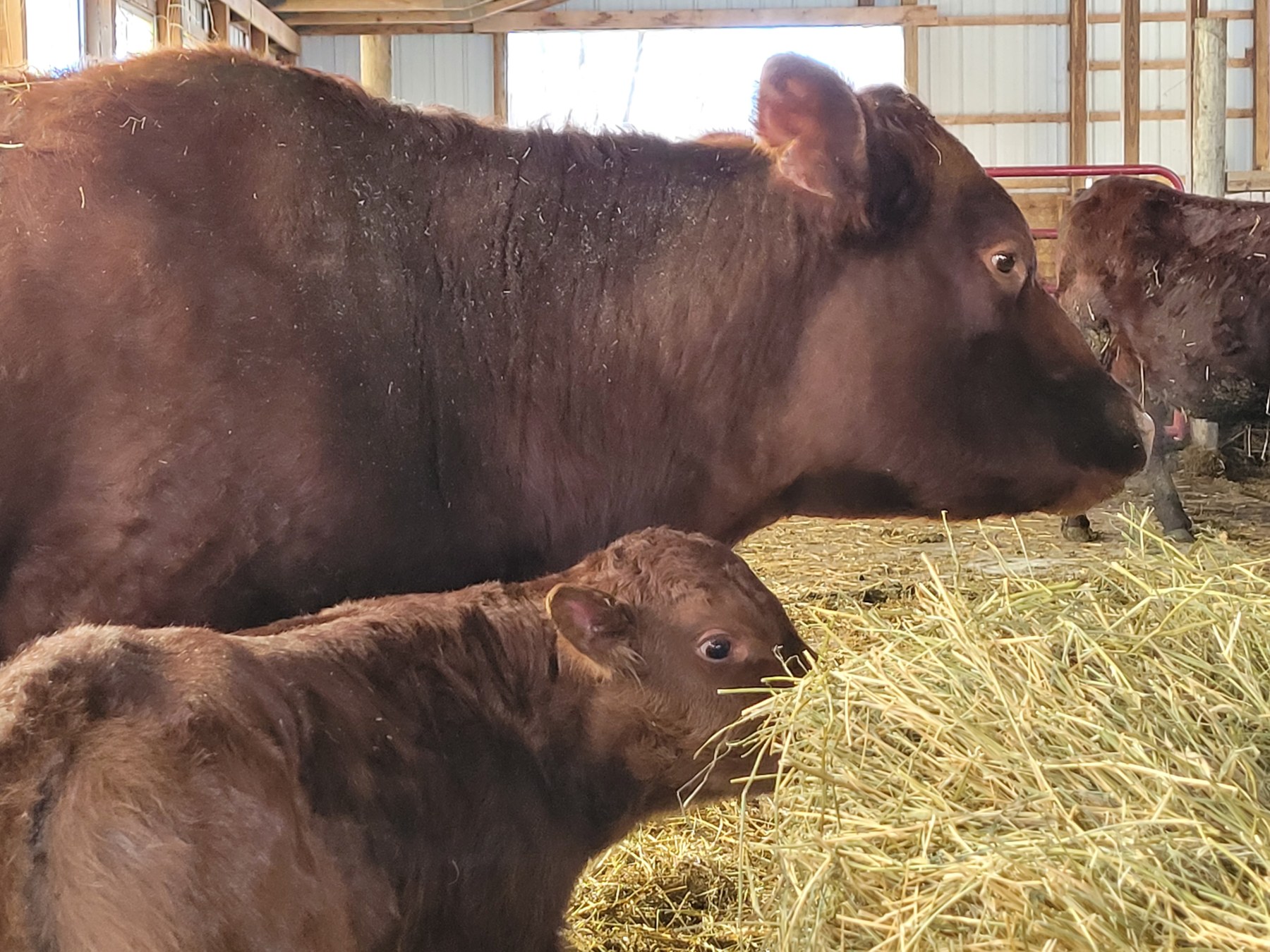
We keep newborns and their mothers in the Maternity Ward for two or three days. We make sure both are recovering well from calving and are bonded. We also give the babies their ear tags and castrate the male calves—a process called banding—unless we plan to keep them as breeding bulls.
Looking Ahead
We have learned so much over the past few years. We took a year off from babies, so we did not have any 2026 calves. We look forward to 2027 calving, though!
Now that we are armed with some knowledge and experience, we have more deliberate plans for the calves. One of our cows, Ruby, delivers the biggest, most beautiful babies. They grow very well. So rather than banding her boys, we are going to see about letting one become a bull (which we will sell so that we don't risk him breeding his mother!).
As we plan for the next generation, I want to be more thoughtful about breeding—preserving the qualities we already love in our cattle while looking for ways to improve. There is still plenty to learn, but being part of this breed’s future is something I’m excited about!