Building the Outdoor Arena
Shop The Stable ↓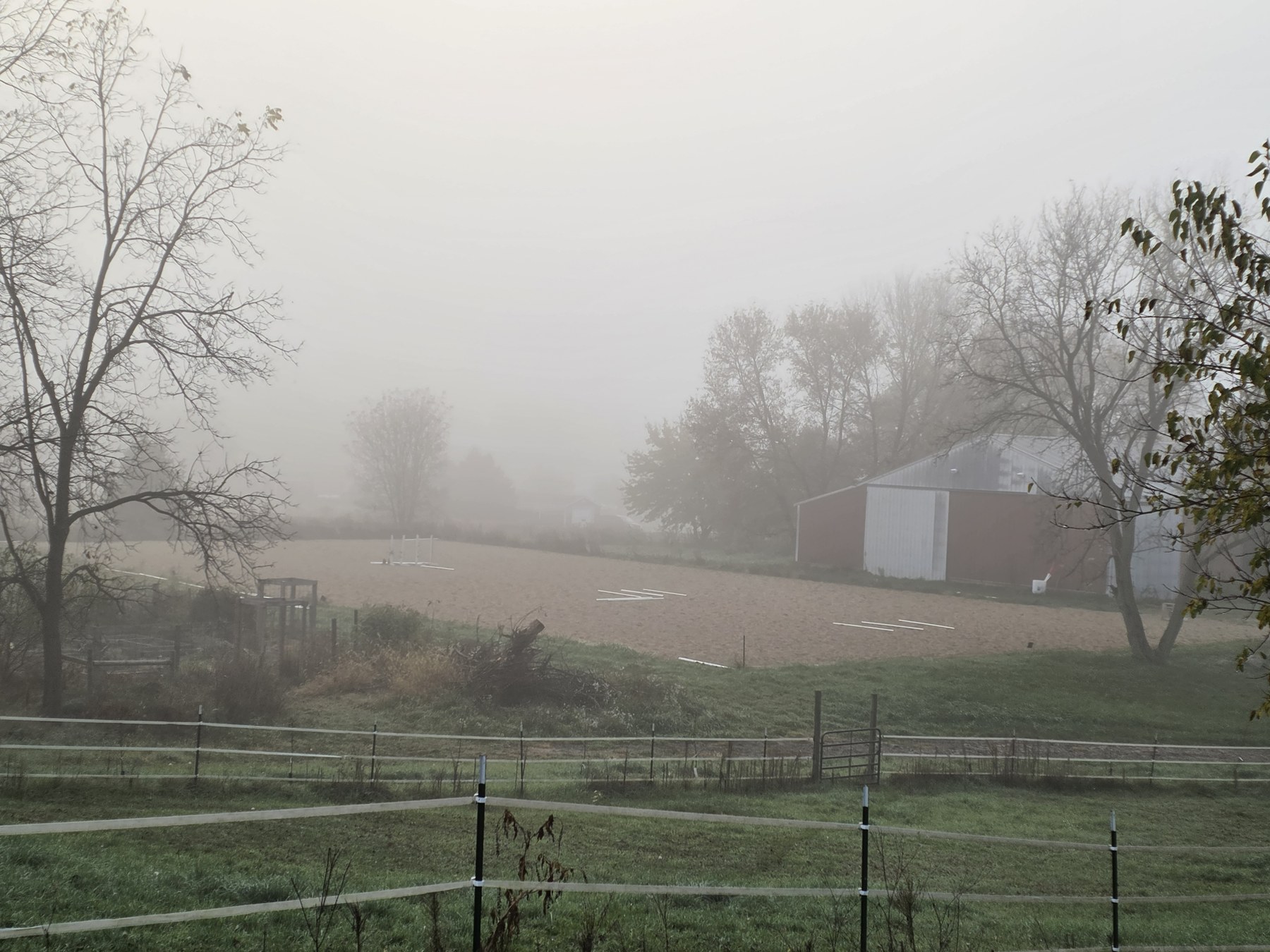
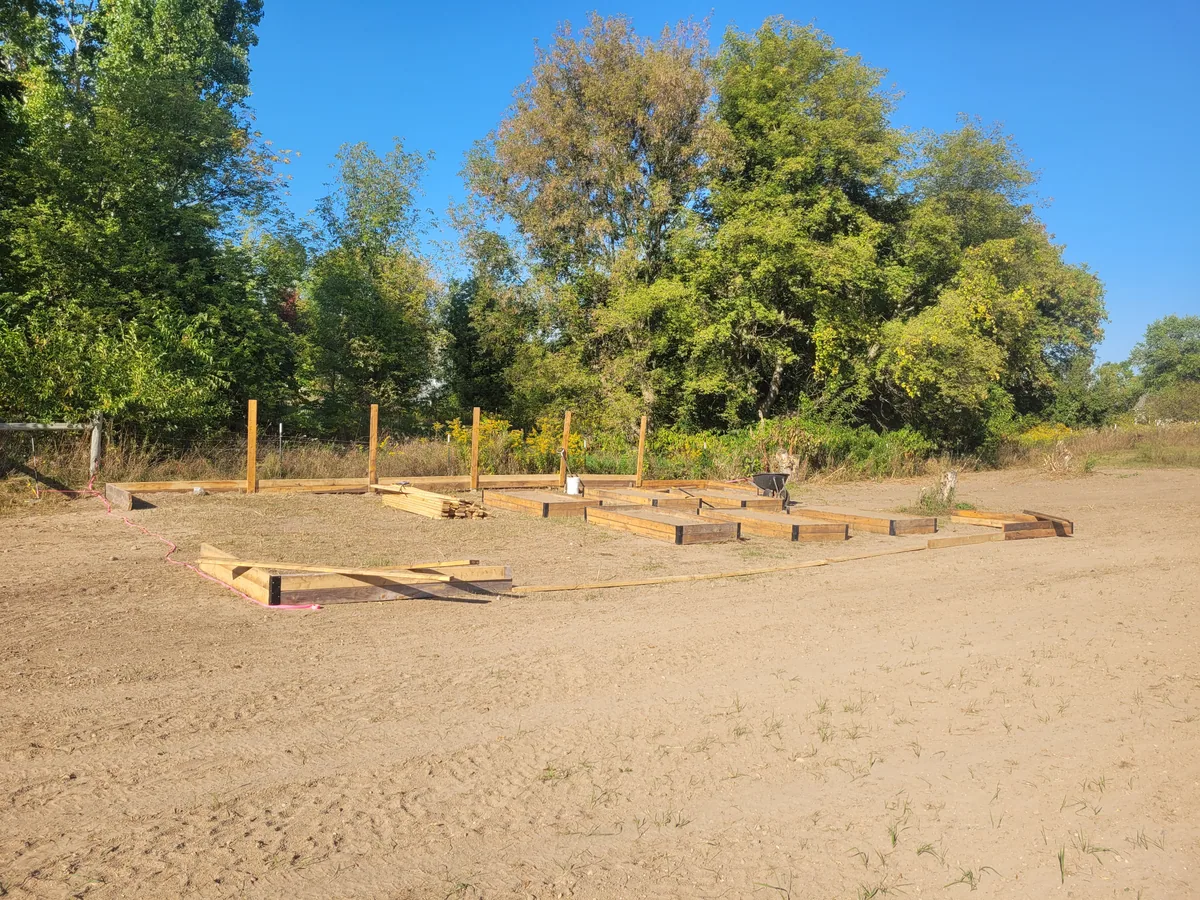
When we first brought the horses home, we were working them in what is now the Front Pasture (formerly the Market Garden). The size was excellent, and since Lillian and Velma competed on grass, I didn't see the negatives in practicing on it.
But the land, not having been intentionally designed as a grass arena, was bumpy and uneven, and rocks would appear out of nowhere. The excessive slope, while great for cross-country and general fitness, made dressage practice difficult. The grass was also slippery when wet, making it hard to ride early in the morning, which is necessary in the heat of summer.
So within a month or so of having the horses home, I knew we needed a real arena.
Choosing the Spot
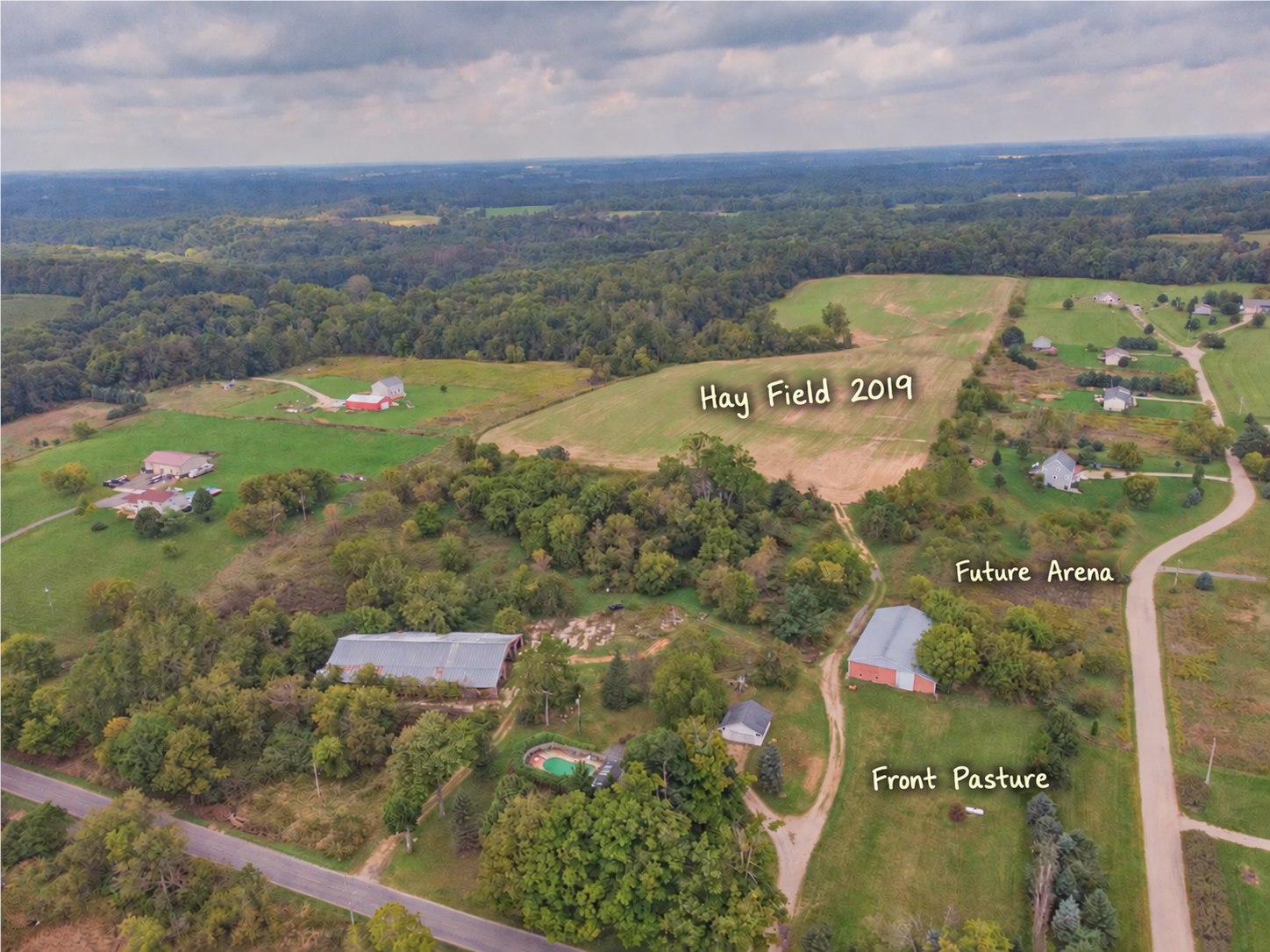
My original plan was to put the arena in the Front Pasture. That area had been the Market Garden before we brought the horses home and needed the space for pasture. I thought all that would be required would be relocating the propane tank, which I wanted to do anyway. The area, while being adjacent to the road, was already protected by a berm and established trees. I thought that would minimize spooking and provide us with privacy.
The arena contractor also thought this would be an ideal location. However, the grading subcontractor killed the plan. Apparently, what I thought was a 1% slope in the days it was a garden was actually over 5%. The grading contractor advised that to correct the slope, we would need a significant amount of fill, and a 5-foot retaining wall would need to be built on the driveway side! There would also need to be extensive drainage work.
I wanted to keep the arena cost within $40k, and I wanted it finished fast. So we needed to scout a new location.
One of my favorite things about our property is that it is not a flat, open parcel of farmland. But that also made finding an arena site difficult. I wanted the arena to be 100 × 200 feet. My contractor and I walked the entire front ten acres looking for a site. The Lower Cow Pasture had the same elevation issues as the Front Pasture. The top of the Cow Hill and Rowan's Pasture were too small. And we needed every square inch of the Hay Field for hay.
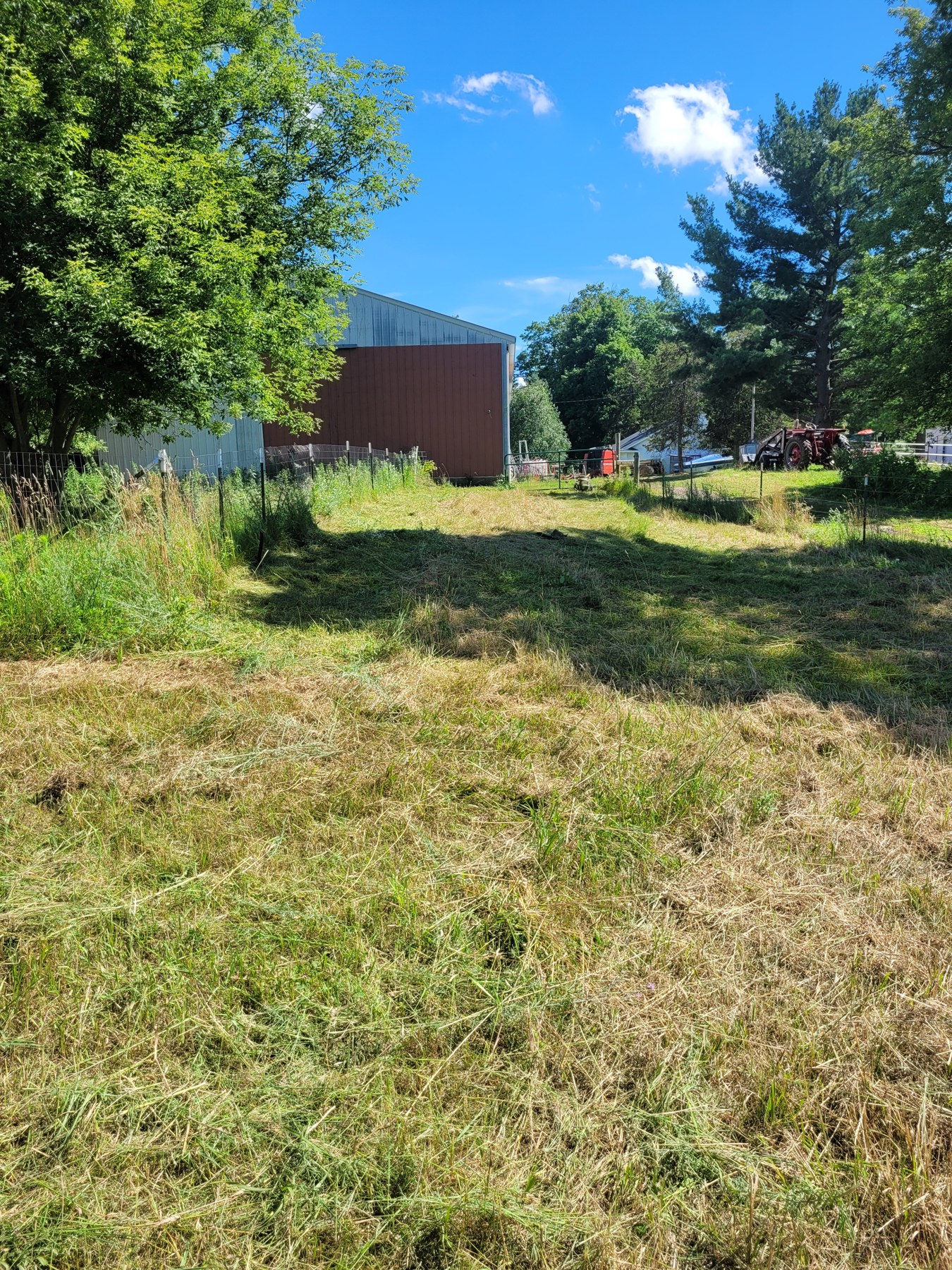
The only spot that would work was the area behind the Small Barn. This area had already undergone several transformations, and I groaned at the idea of spending even more time refining it. At some point in the past it was a garden, and every time the soil was disturbed, fragments of weed barrier would come to the surface.
When we bought it, it was a mess. Scrub had grown up, and there were a lot of crowded, unhealthy Box Elder Maples that were harboring Box Elder bugs. We had cleaned the area up, with the help of the goats, and removed dead and dying trees. We fenced in a portion of the area adjacent to the Small Barn for the goats and sheep. They had large, warm areas in the Small Barn for shelter, and I liked that they could go in and out as they pleased.
We planted fruit trees in the rest of the area—twice (they died the first time because we hadn't watered well or kept up with weeding).
So when it was decided that was the only area that could potentially hold the arena, I was a little saddened. It was going to require relocating the road and doing significant grading, but not nearly as much as the front pastures would have required, and it didn't need retaining walls or special drainage.
What it did require was relocating the sheep and goats, removing the fencing, taking down several trees, and relocating 48 fruit trees.
Breaking Ground
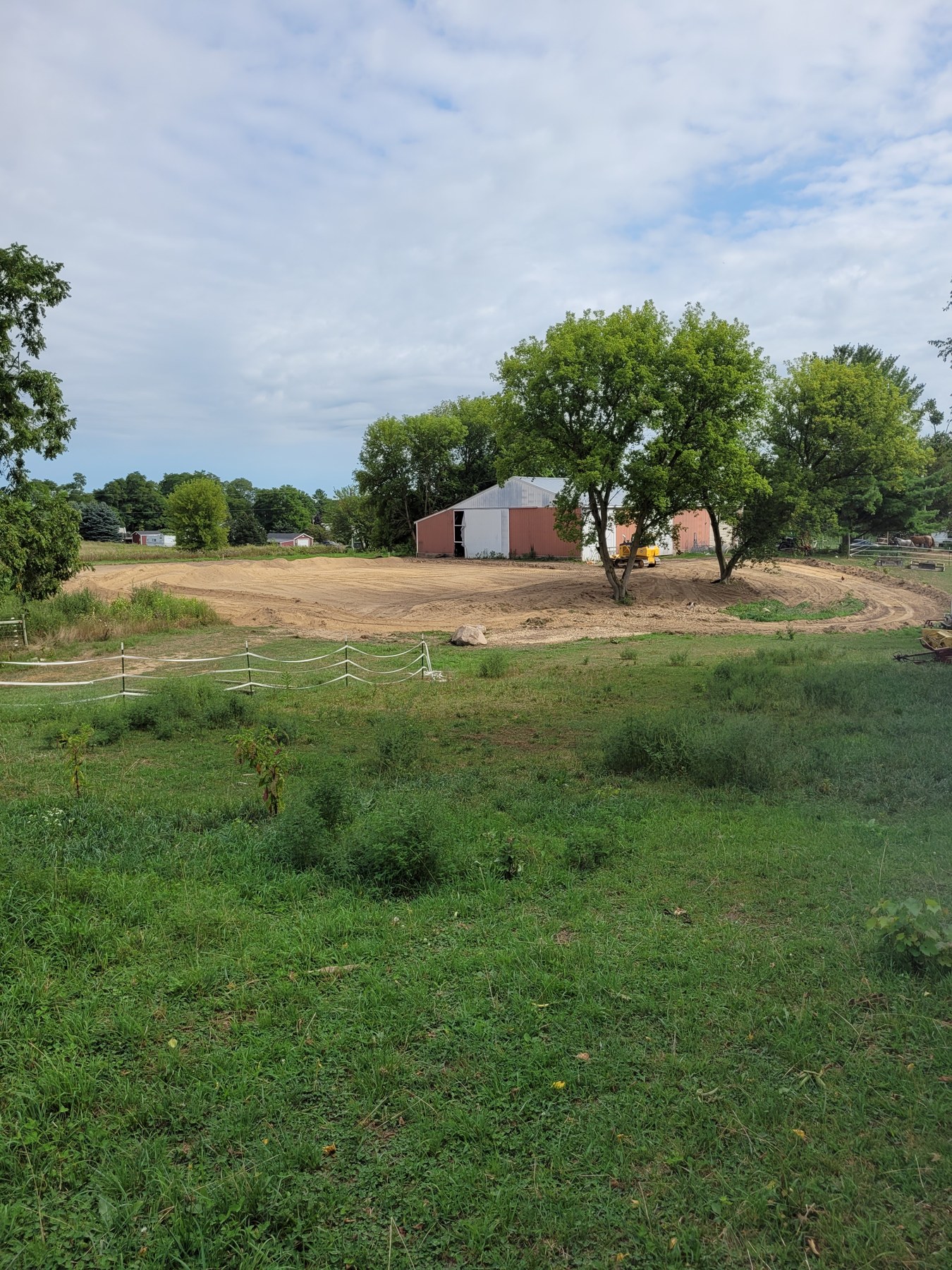
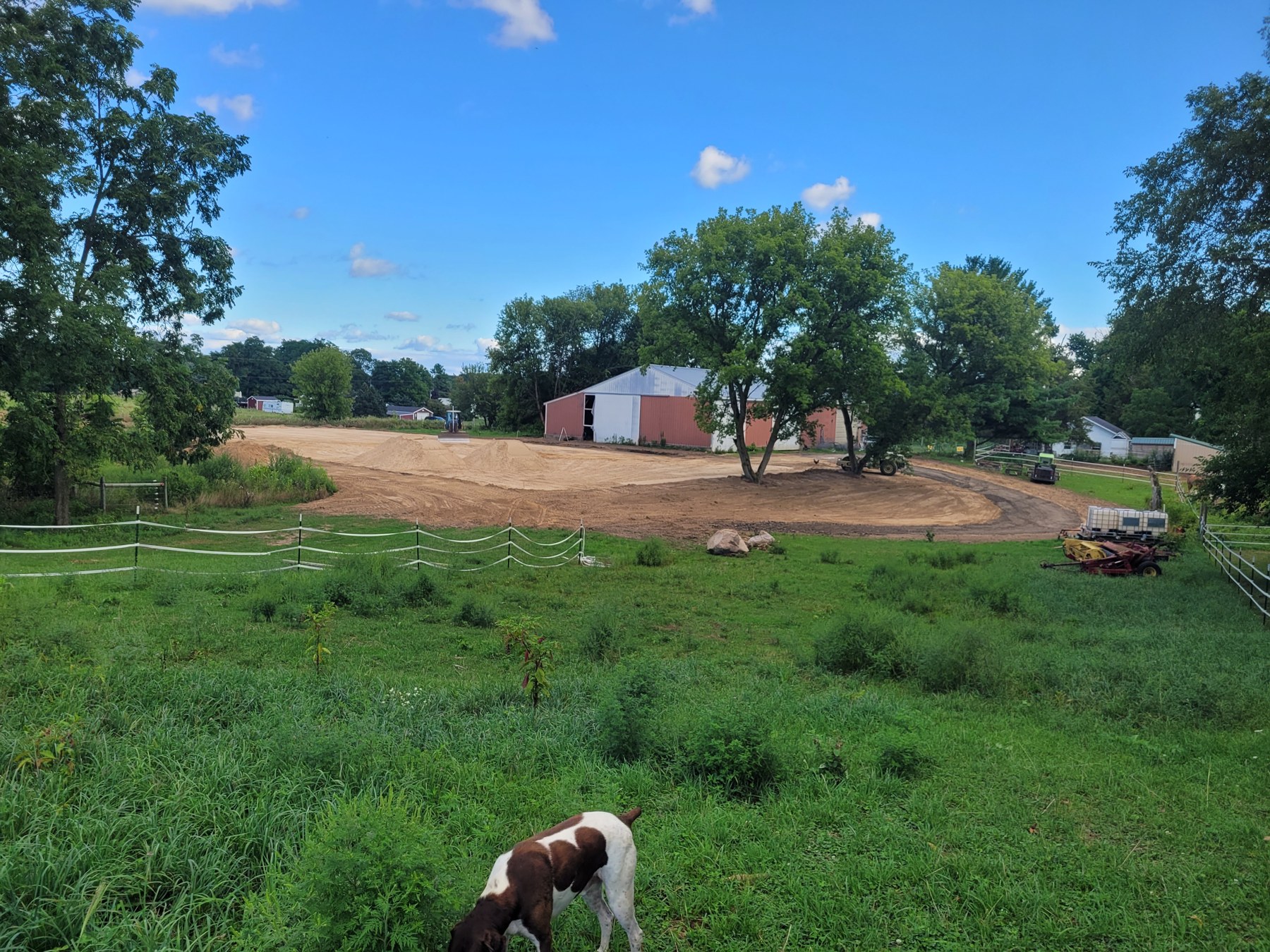
Once the fence was down and the fruit trees had been moved (only a couple were relocated to their permanent homes—most were placed in tubs to be replanted after construction was completed), work began to level the area and create the new road.
Relocating the Road
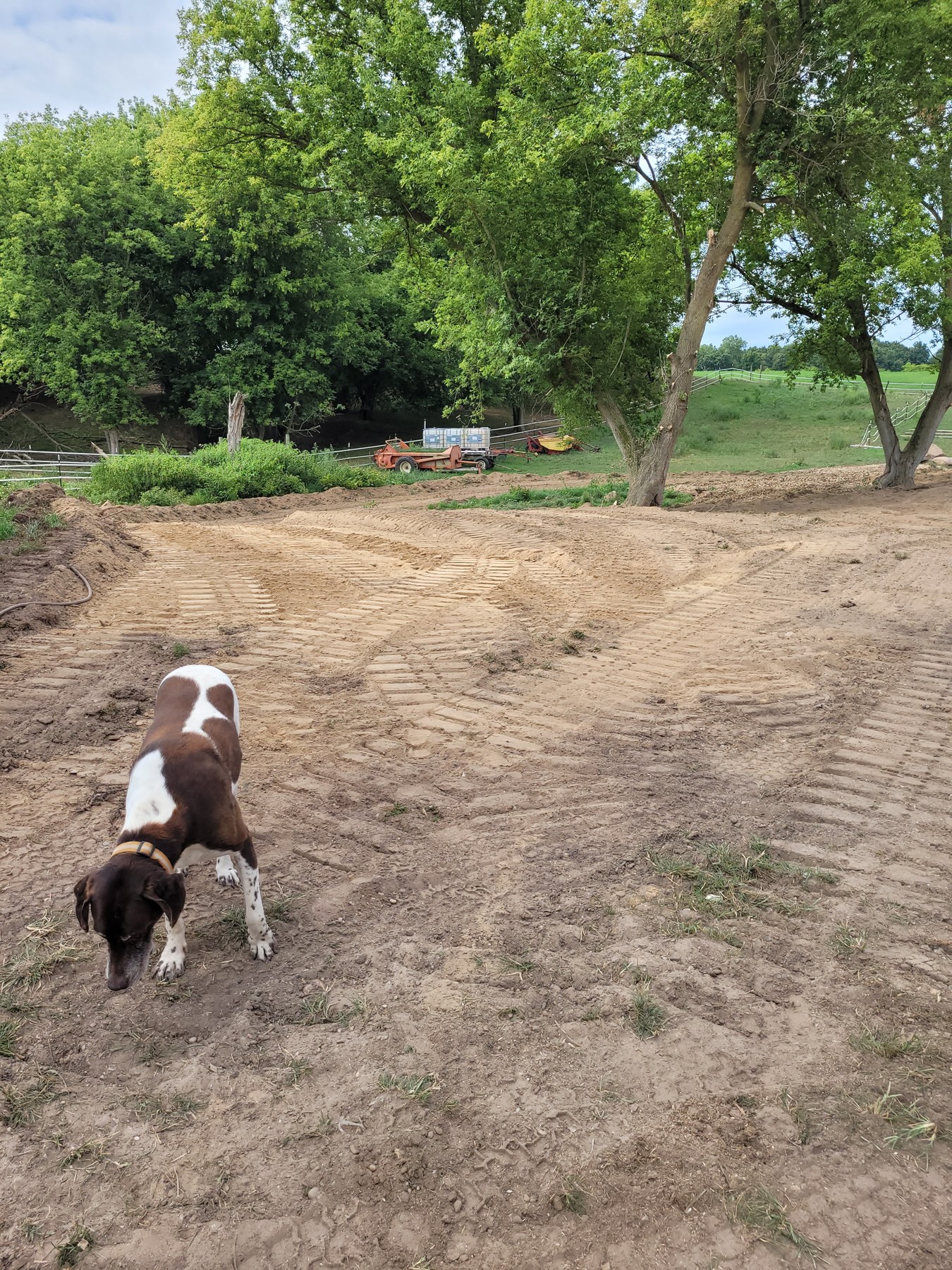
I had much trepidation over the road relocation. It required changing Rowan's pasture from the long, rectangular hilly area to a smaller, square pasture. I was worried he wouldn't have enough room to run, but he is not much of a runner anyway and has proven that he has plenty of space!
The width of the road also became quite a debate between my husband and me. He is a utilitarian, and I care about aesthetics. He wanted the road to be 20 feet wide so he had extra space for maneuvering his hay equipment without risking a tire going off the road. I wanted as little road and as much green space as possible, favoring a 12-foot road. We ultimately compromised (with the aid of a tape measure along each piece of equipment) and built the road 16 feet wide.
On the list of “Things That Stress Me Out That Shouldn't” was the starkness of the road. When they first spread the asphalt, it was so dark, and the edges were so defined. It was contrary to the softness I was trying to achieve overall on the farm. My husband reassured me that it would soften over time, and eventually we might not even be able to see the asphalt, consistent with the look of the old road. Thankfully, he is turning out to be correct.
Building the Surface
After many loads of fill had been brought in and the bulk of the leveling work had been completed, the fine sloping work began. A base layer was carefully laid. After each inch or so was laid, the base was compressed. Laser levels were used to create the drainage slope. Next, the finish layer of sand was spread.
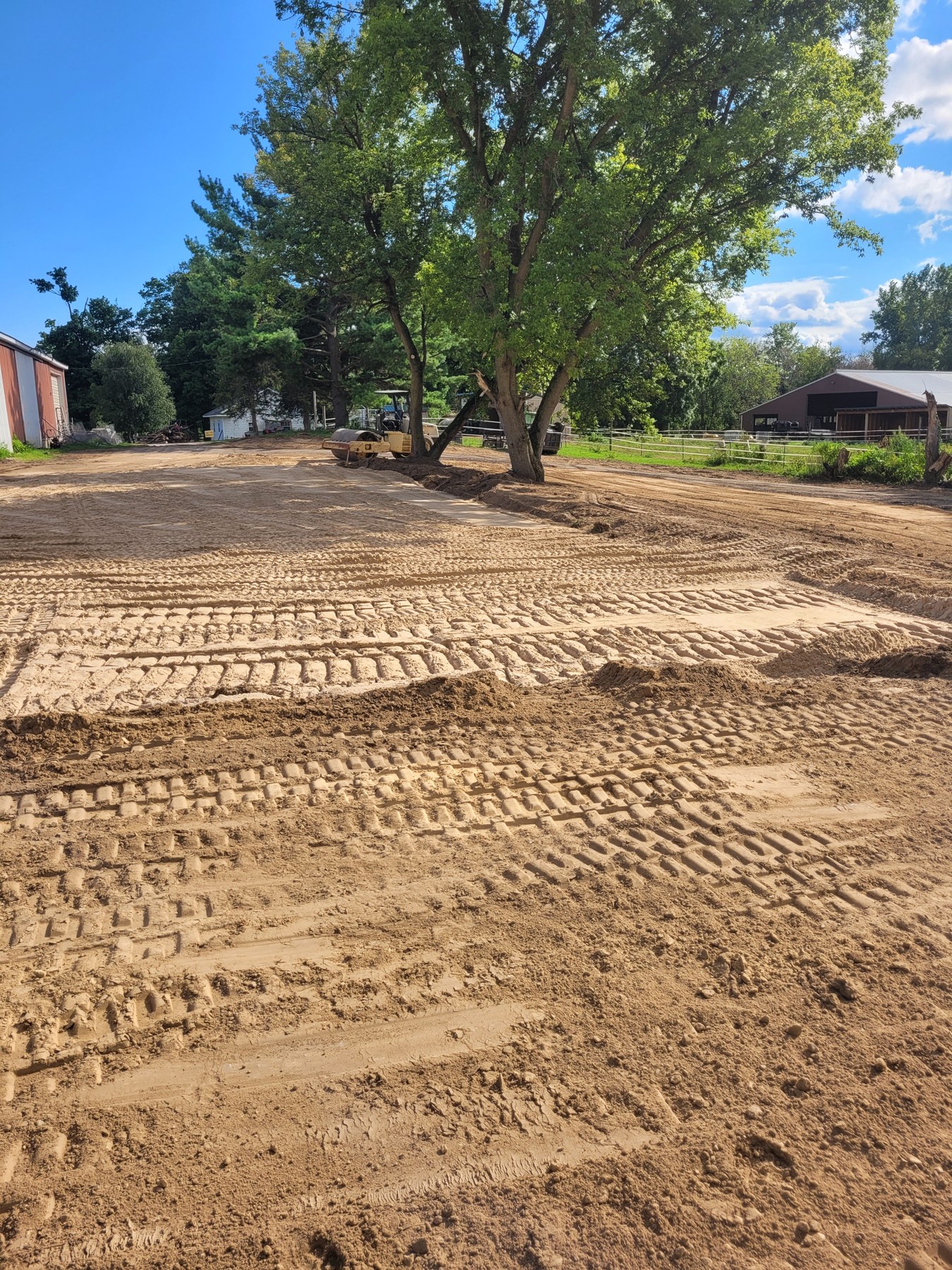
A dirt berm was built around the arena to hold the sand.
Ready to Ride
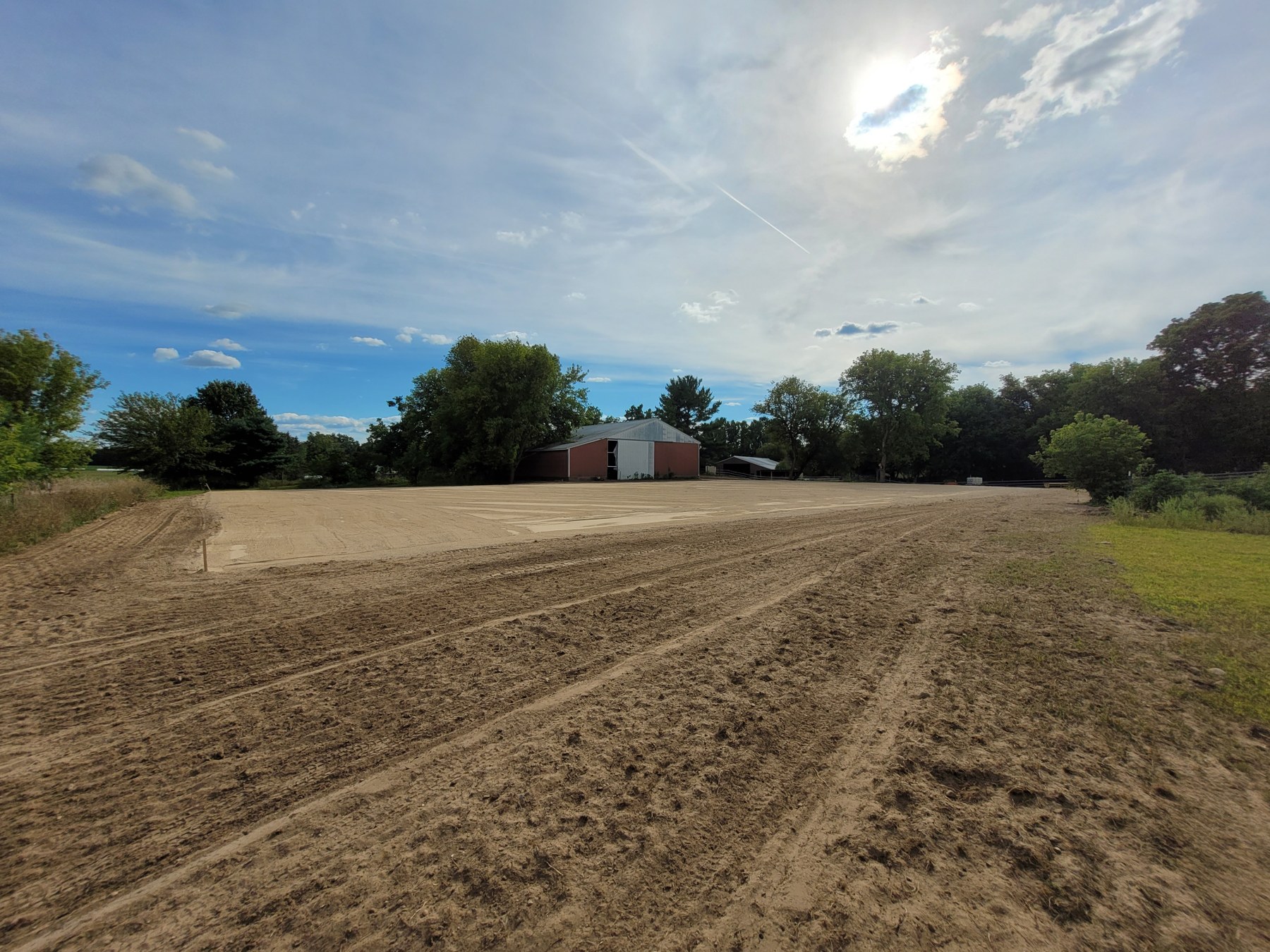
After a few short weeks, the arena was completed! Of course, the dirt around it was very desolate.
The time of year was perfect for planting. I planted daffodil bulbs in the semi-circle tree hill and then grass seed over the entire area. Although most of the fruit trees needed to find a new home on the grounds, some had only been moved so they weren't damaged by construction equipment. Those were replanted, and homes were found for the others—those became the “Pear Hill Orchard” and “Rowan's Orchard”.
From the Saddle
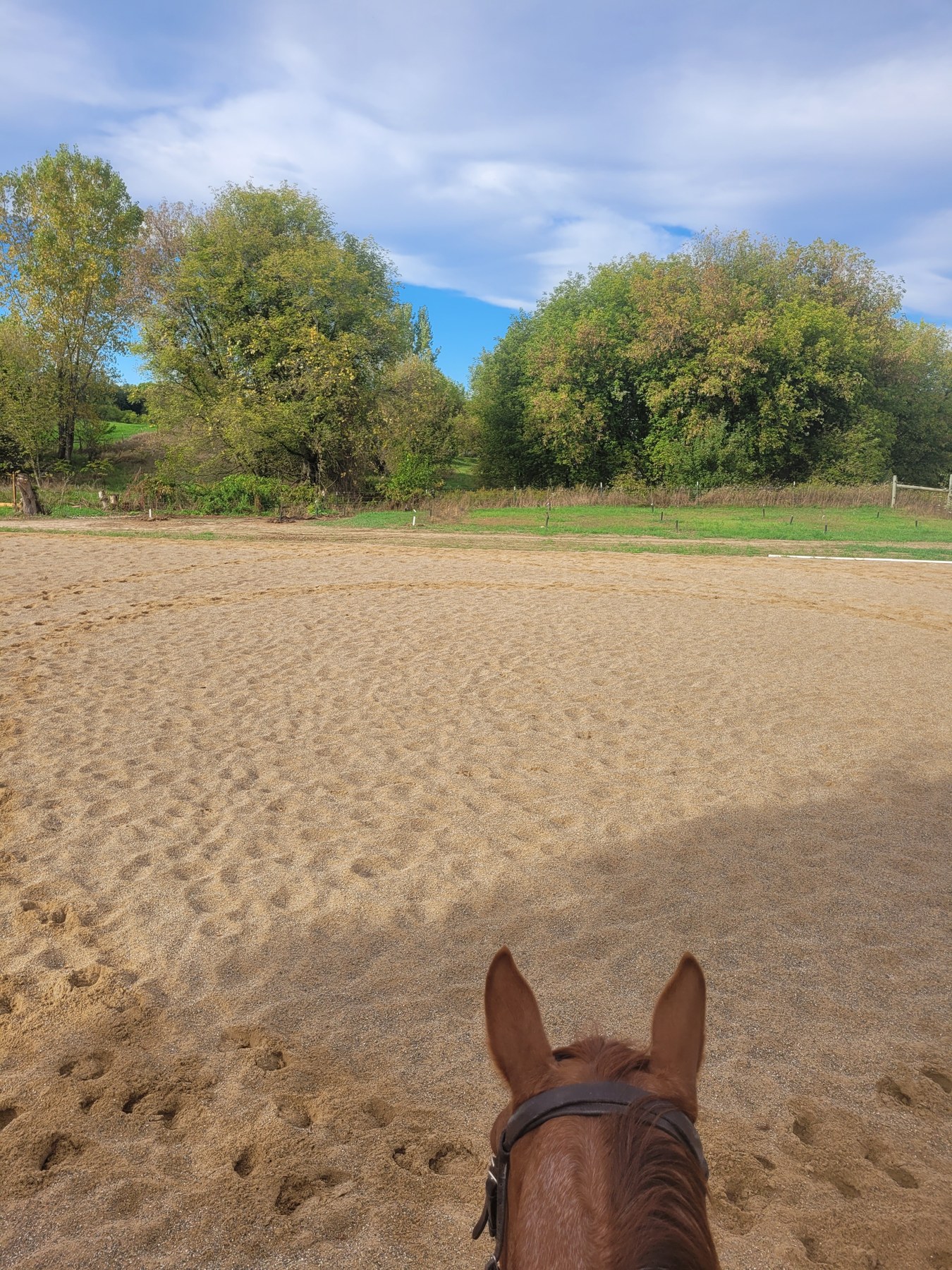
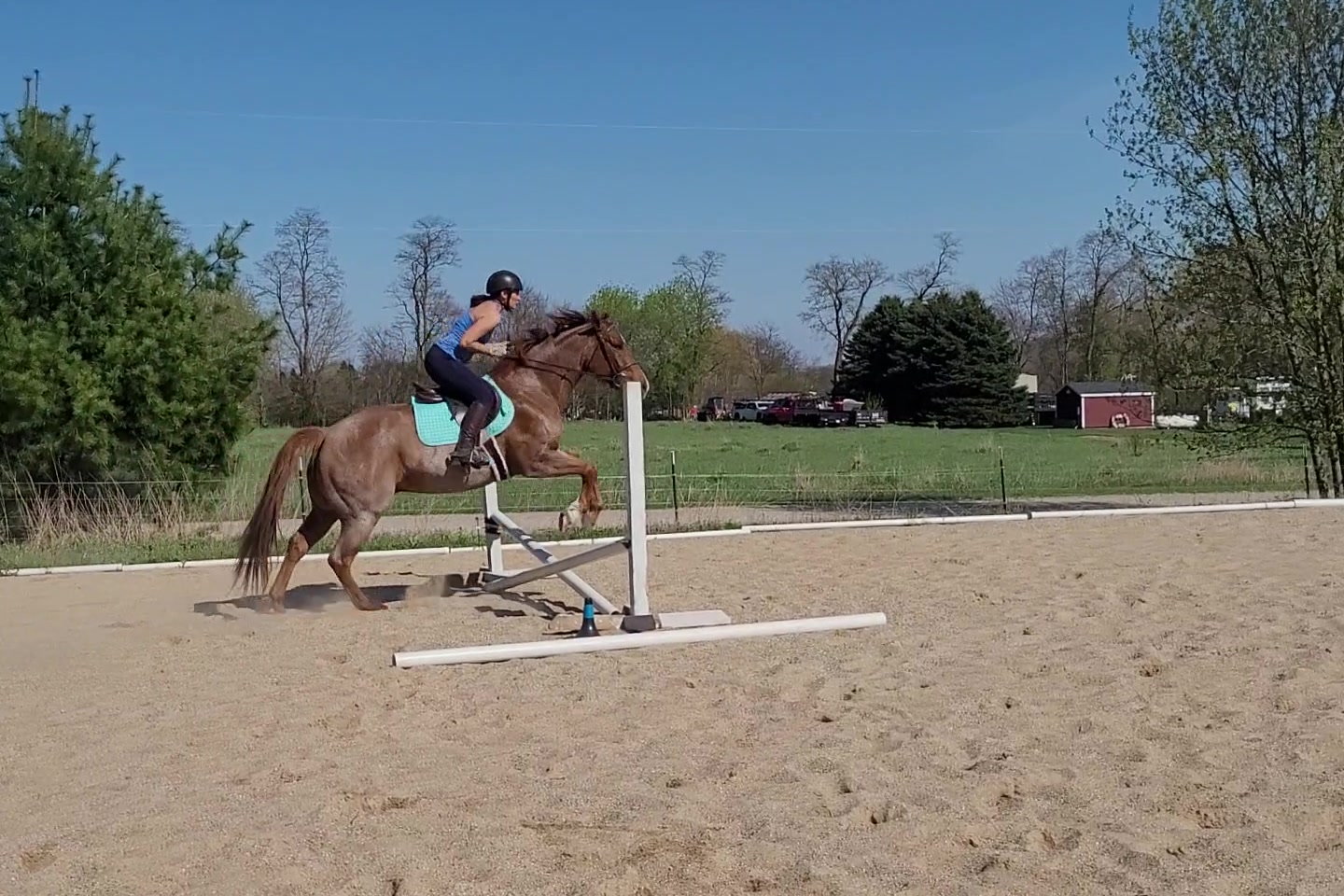
Velma, who loves the structure of arena work, was very happy to have an arena again. Rowan is...adjusting. He would much prefer hacking out on the Back 30 to practicing 20-meter circles. He developed a very bad habit of leaving the arena when he didn't like our exercises, but my trainer now has that under control. I need to decide on an enclosure for the arena, and my mind has wandered from a traditional rail fence to a boxwood hedge to low lavender plants with planters every so often.