
My Misadventure With Bees
Shop Country Style ↓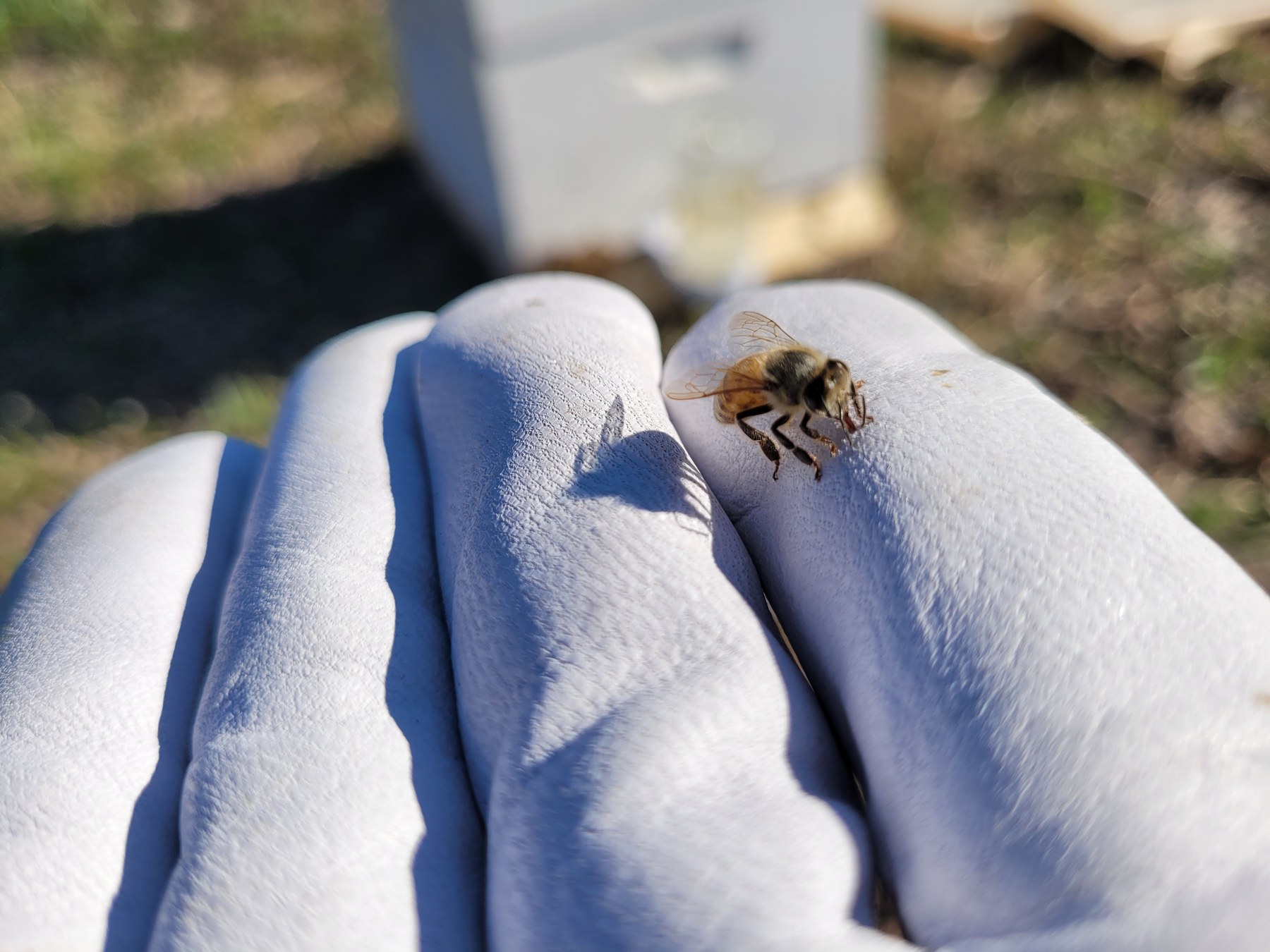
Bees Please!
Bees were always part of my plan for Idlewind Acres. Honeybees, to be exact.
Honeybees face serious threats from Varroa mites and a shortage of suitable flowers to forage on. [source] These mites feed on adult and developing bees. Female mites enter brood cells before they are capped and lay their eggs there. The young mites hatch and feed on the developing bees, weakening them before they even emerge! [source]
So I knew I wanted to do my part to help save the bees. And of course, I had dreams of bottling honey from my hives.
The Dream and the Prep
In my bee dream, my bees lived in beautiful, hand-painted hives within a bee garden. The bee garden had a central white stone path that branched into three sections: one in the middle and one on each side. Those sections would each house a hive.
The garden was to be planted with a large variety of flowers that would bloom from early April until the end of October.
The bees would be happy. They would fly around the orchard pollinating the fruit trees and feast on the flower pollen when the trees were done blooming.
In my bee dream, I harvested just the right amount of honey at just the right times. And of course, I was never stung.
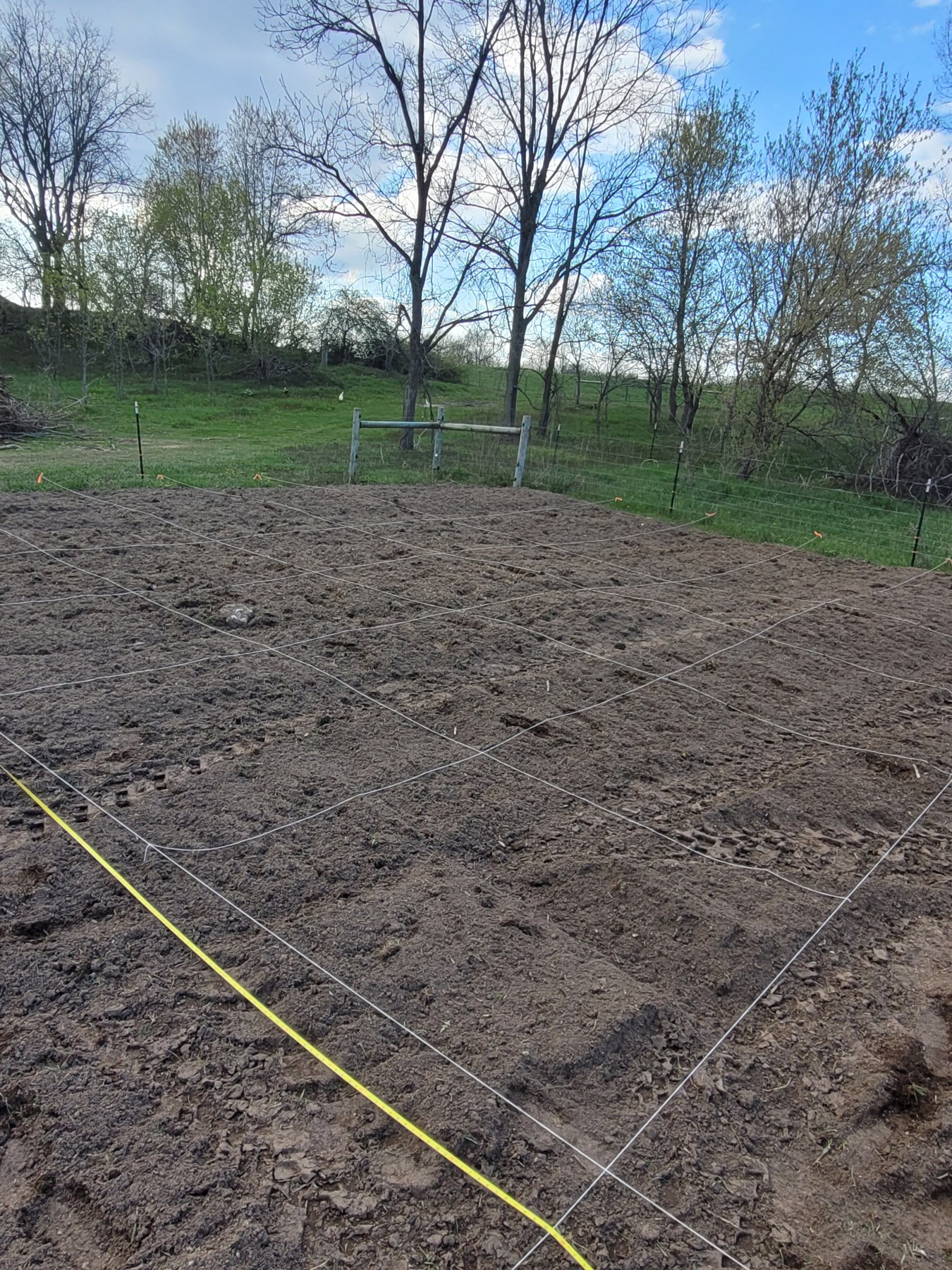
In early March, as soon as the ground was somewhat workable, I began the Bee Garden. My husband tilled the area, and we carefully measured, laying out a grid.
I didn't lay the rock pathways yet because I wanted to make sure this was where I wanted the Bee Garden permanently. If I changed my mind, it would have taken too much time to remove all of the little rocks—if I even could. This turned out to be smart.
I planted spring bulbs and scattered wildflower seeds.
Over the winter, I purchased a beehive that needed to be fully assembled. Unfortunately, I became overwhelmed with all of the pieces and the lack of instructions. So, I bought a prebuilt one. Once I saw what a finished hive looked like, I was confident I could assemble my original one. I added that to the next year's winter project list.
Here Come the Bees!
I carefully researched bee varieties and suppliers. I decided on Italian honeybees because they are generally known for their gentle temperament. [source]
My bees arrived at the end of April. Despite my careful research, I was not prepared for how they would arrive! The bees were delivered to the post office. I live in a very small town, and I think my local postal workers find me equal parts intriguing and silly.
When a package arrives that must be picked up, it is always something interesting. Once, I had about 20 day-old chicks delivered to the post office. My kind and loving postal workers heard them chirping in their little box and moved them into a heated office until I could pick them up! They are so sweet.
But with the bees, I may have fallen out of favor a little. The bees arrived in a small, screened box. That's it. The screened box was not within another box. And what's worse— some of the bees made their way out of the screening! That's right— there were bees just free!
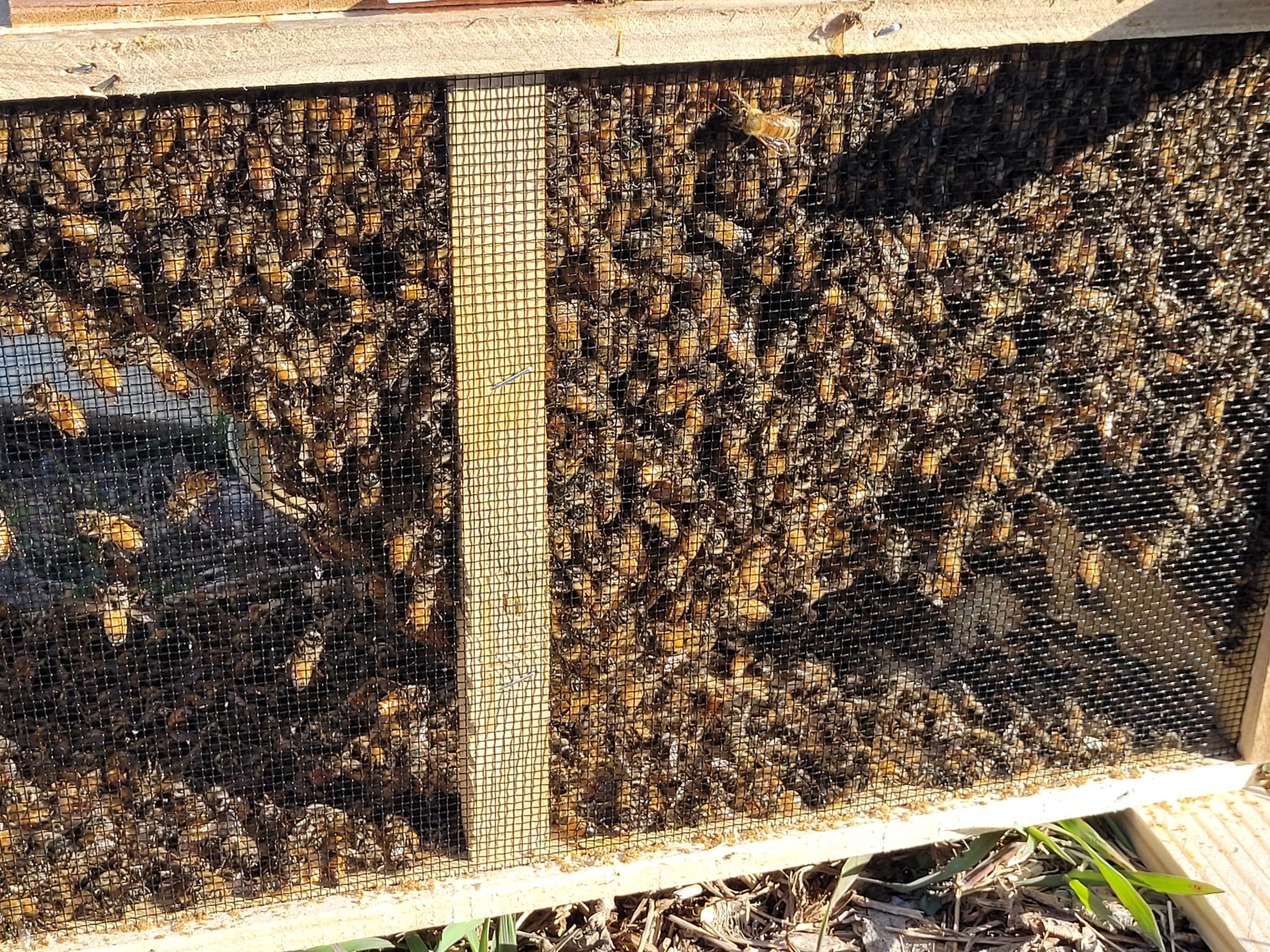
Luckily, within the screened box, the queen was inside a tiny cage of her own, with a candy plug blocking the exit. The bees were working to eat through the candy plug to free her. Fortunately, they did not do us any harm. I still apologized profusely.
Home Sweet Home
When I left the post office, I placed the bee crate on the passenger seat next to me. I was terrified, but I had turned the heated seat on, and I didn't want them to be too cold.
I put my beekeeping suit on as soon as I got home. Then we went to the hive. (The hive was supposed to be on a stand, but I hadn't assembled the stand yet.) When releasing the bees, I first had to open the crate and remove the queen cage. I hung that cage in the hive. Then, I had to dump the bees into the hive, brushing off any stragglers.
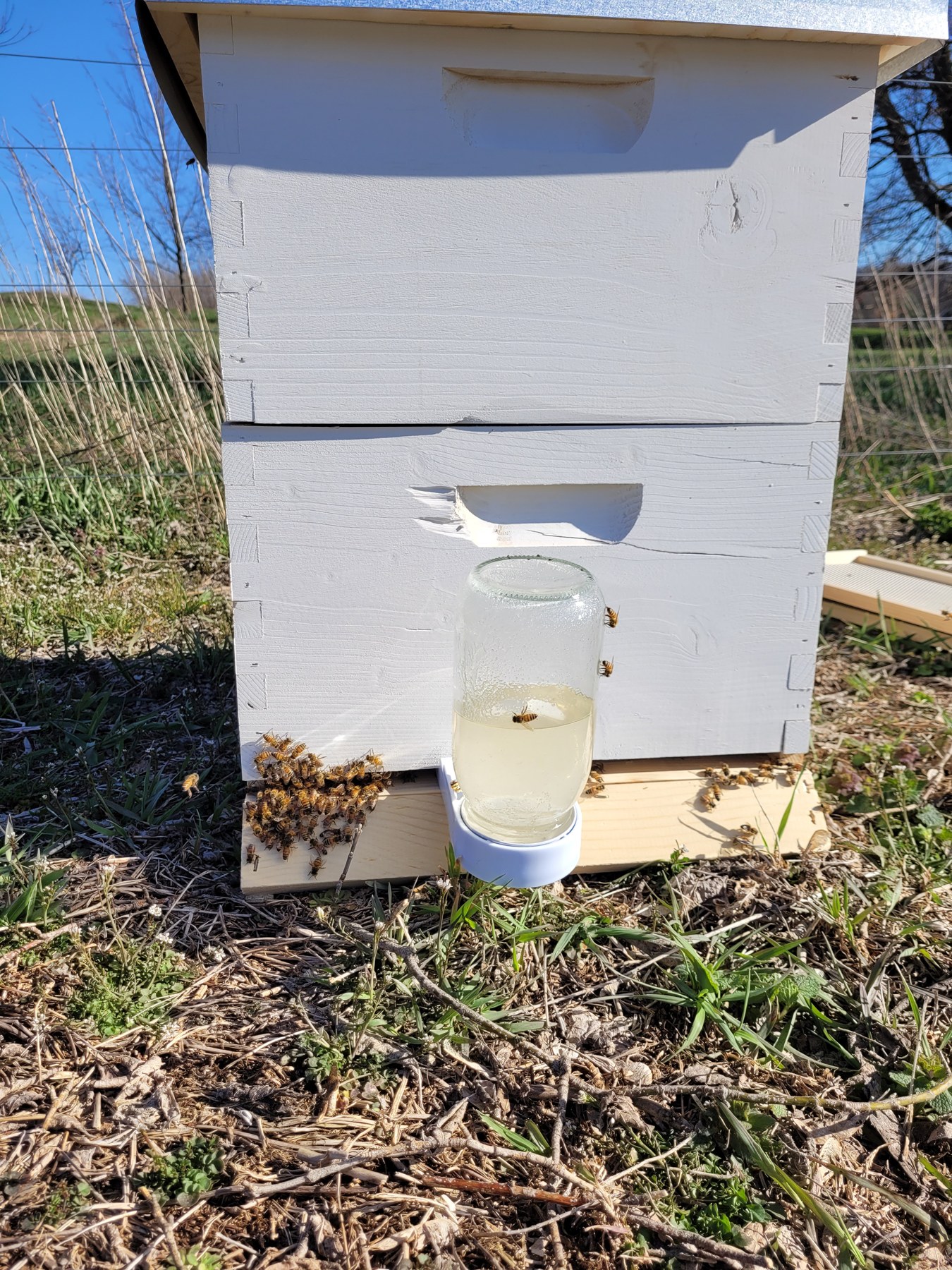
Since there were not many flowers blooming yet, I provided the bees with a sugar solution.
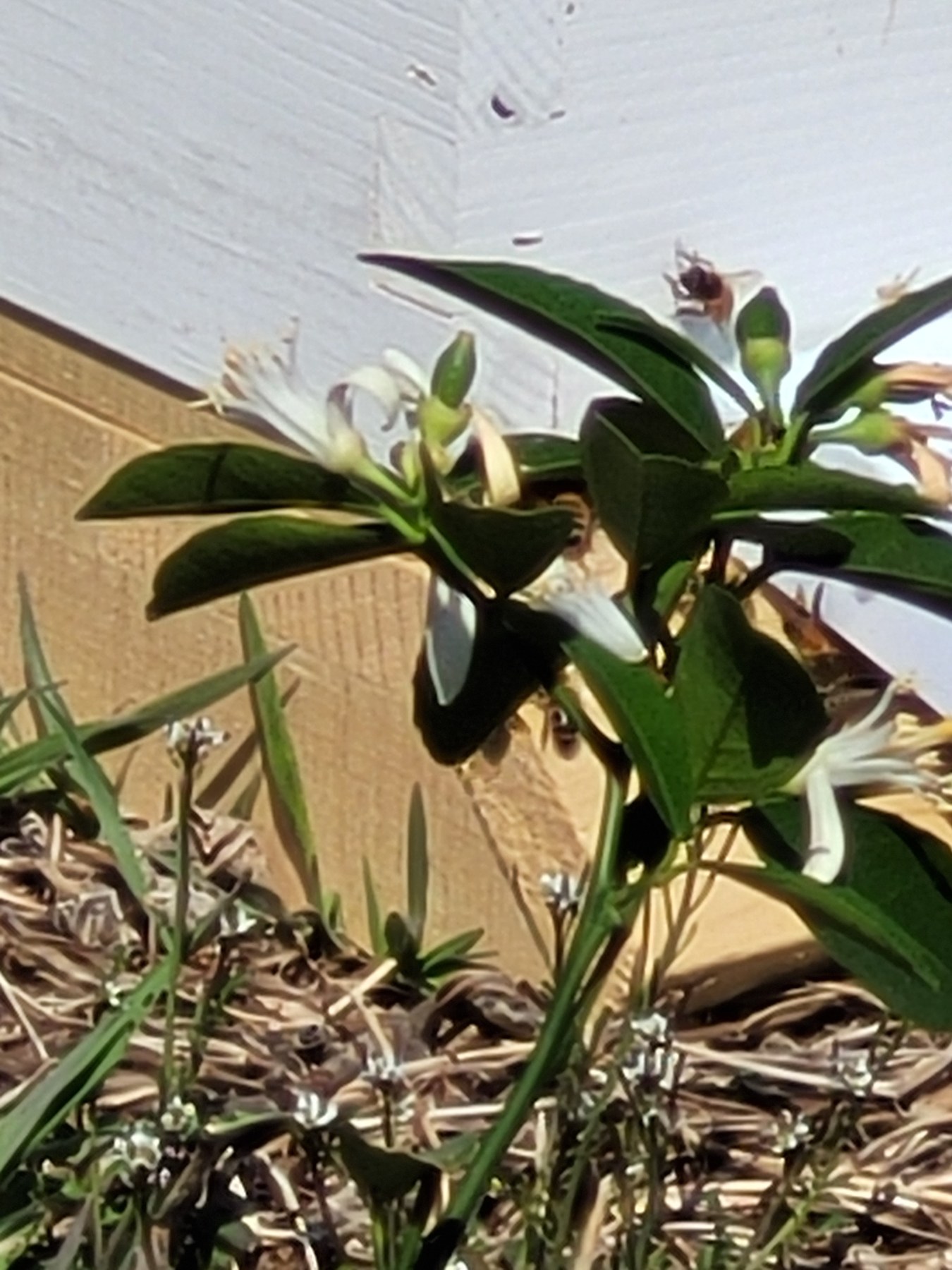
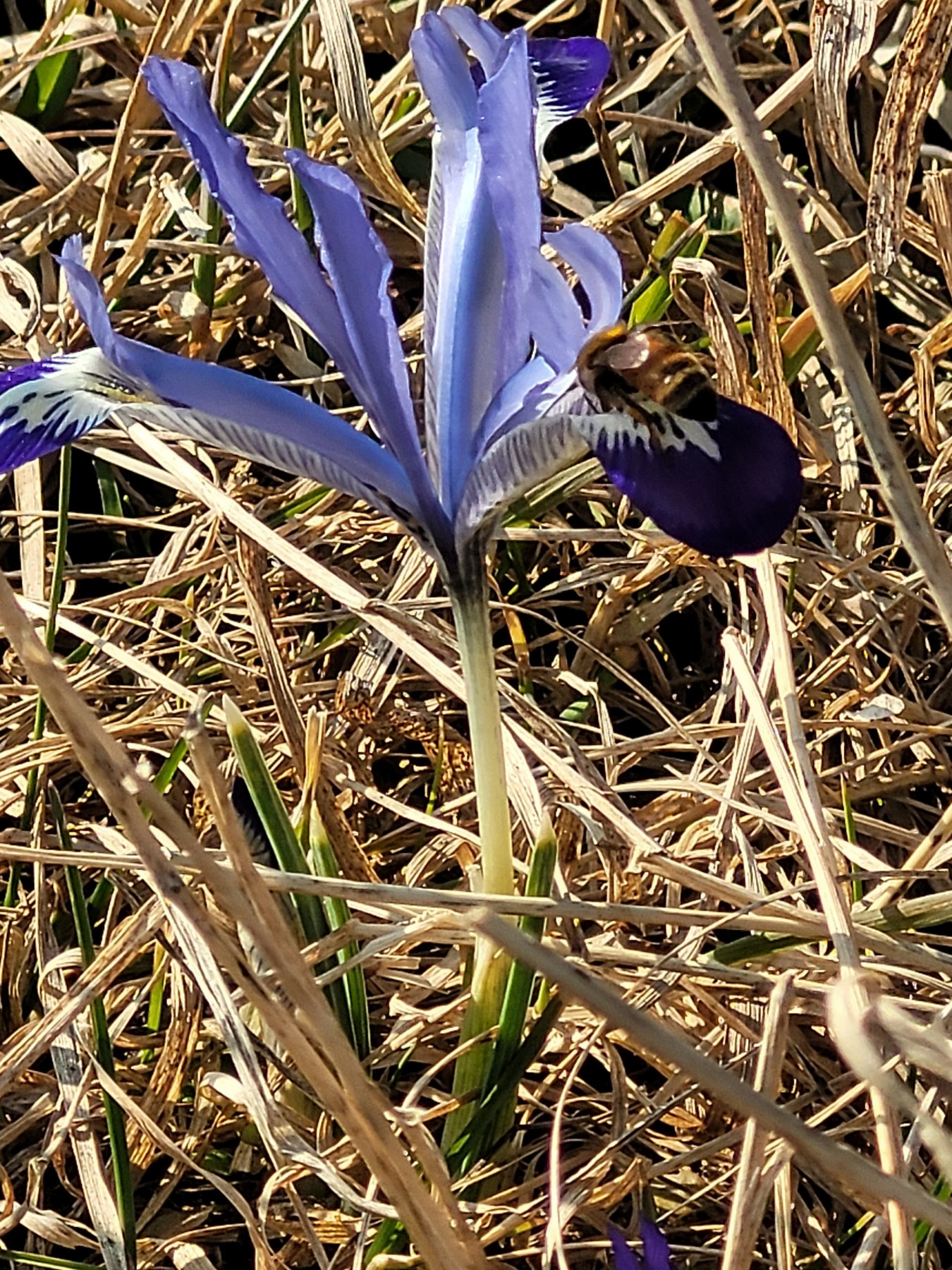
When one of my citrus trees bloomed, I eagerly carried it (in my bee suit) to the hive so it could be pollinated! No more paintbrush pollination for me! As the spring flowers and wildflowers started blooming, I was so happy for my little bee family.
The Misadventure
My bees seemed to be thriving. I checked on them periodically, using a smoker to calm them. They were making honeycomb, and I was excited for my first honey harvest at the end of summer!
The Bee Garden was located in what is now the Enclosed Garden. This detail gives away the ending, but the location is crucial for our story. Before the Outdoor Arena and Enclosed Garden were installed, my sheep and goats were directly to the south and the Orchard (when we still had just one orchard) was to the east. The Orchard was in its infancy— it had just been planted (for the first time in that location) the year before. And since that was our third try at an orchard (after failing in the first orchard location twice), I was determined to baby my baby trees. And of course, I spent oodles of time with my goats and sheep.
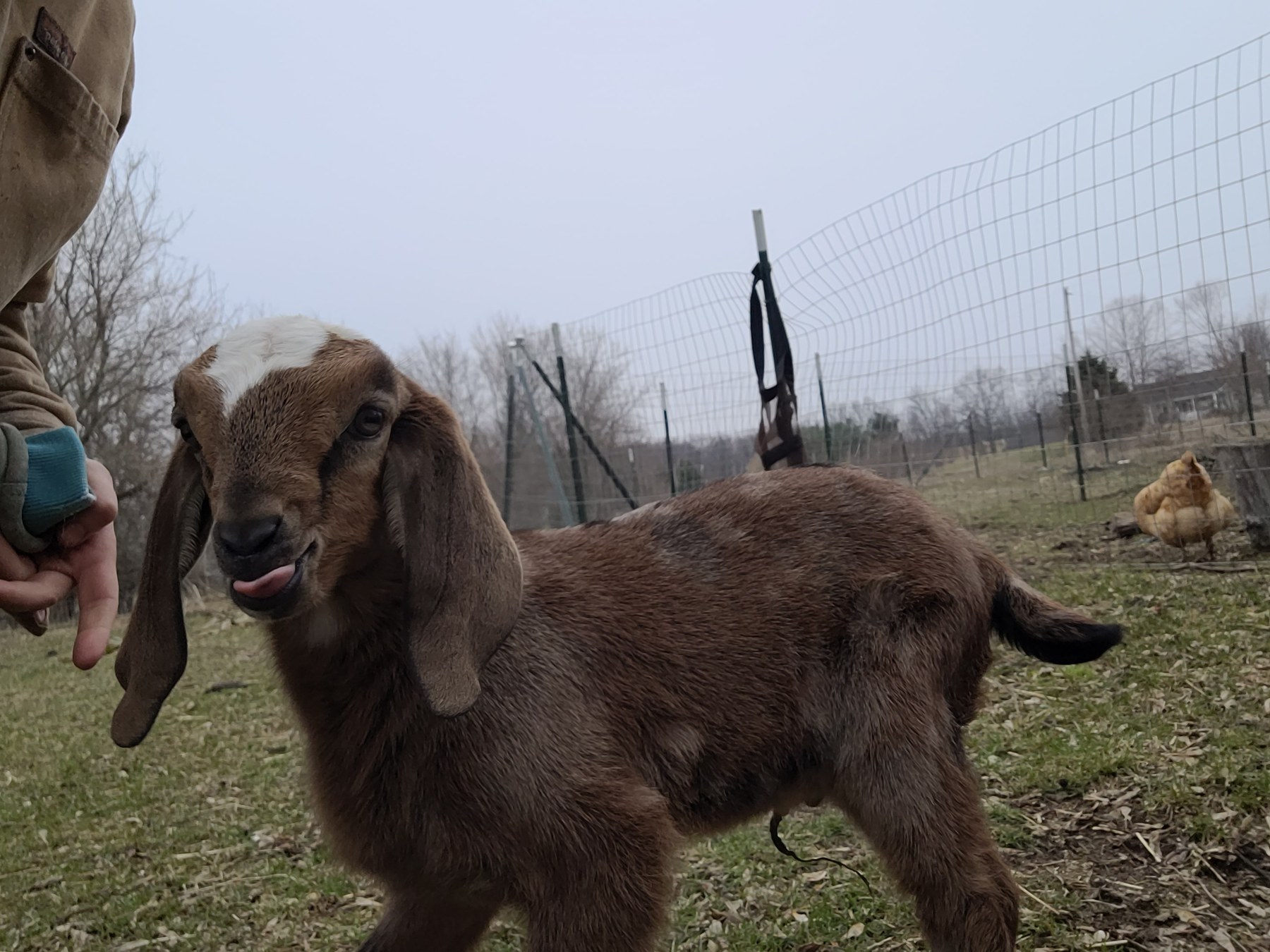
So between the baby trees and the baby goats, I was in the vicinity of the bees often. Of course, I did not wear my bee suit unless I was actually checking the hive. At first, it was fine. But then, one day, walking by the Bee Garden on my way back to the house from the orchard, a bee flew straight at my face! It became stuck and stung me right next to my eye! My eye was swollen for a week.
I would love to tell you that was my only sting. But it was only the beginning. A few weeks later, on one of the first "sandal days" of the year, I was stung on the top of my foot by multiple bees. My foot swelled so much that I couldn't put on a shoe! And over the next few days, the swelling crept up my leg until it was over my knee!
The End of the Misadventure
It took two weeks for the swelling to subside. After that, I was too afraid to pass the bees to get to the orchard. The baby trees went unwatered and unweeded. Not surprisingly, they perished. I was still able to play with the goats and sheep, but I stayed in the barn with them.
Even in my bee suit, armed with my smoker, I was too afraid to check on my bees. I decided to move the hive in winter, when the bees would be clustered inside to keep warm. [source] (I still wore my bee suit and had my smoker.) It was so full of honey that it was too heavy for me to move! I abandoned the move until the end of winter. Then I enlisted my husband to help. The hive was light as a feather. I figured the bees had eaten the honey. But when the weather warmed, there were no bees. I don't know whether mites decimated them, whether they got too cold, or whether they abandoned the hive.
I still have my bee dream, but I am going to try mason bees! I won't have any honey, but only female mason bees can sting, and they rarely do unless handled roughly or trapped against the skin. [source] [source] I am looking forward to creating a new Pollinator Garden with mason bee houses in 2027!