Before the garden fills in
The beds are still empty. This is the moment to look at the spaces between them.
Shop this department ↓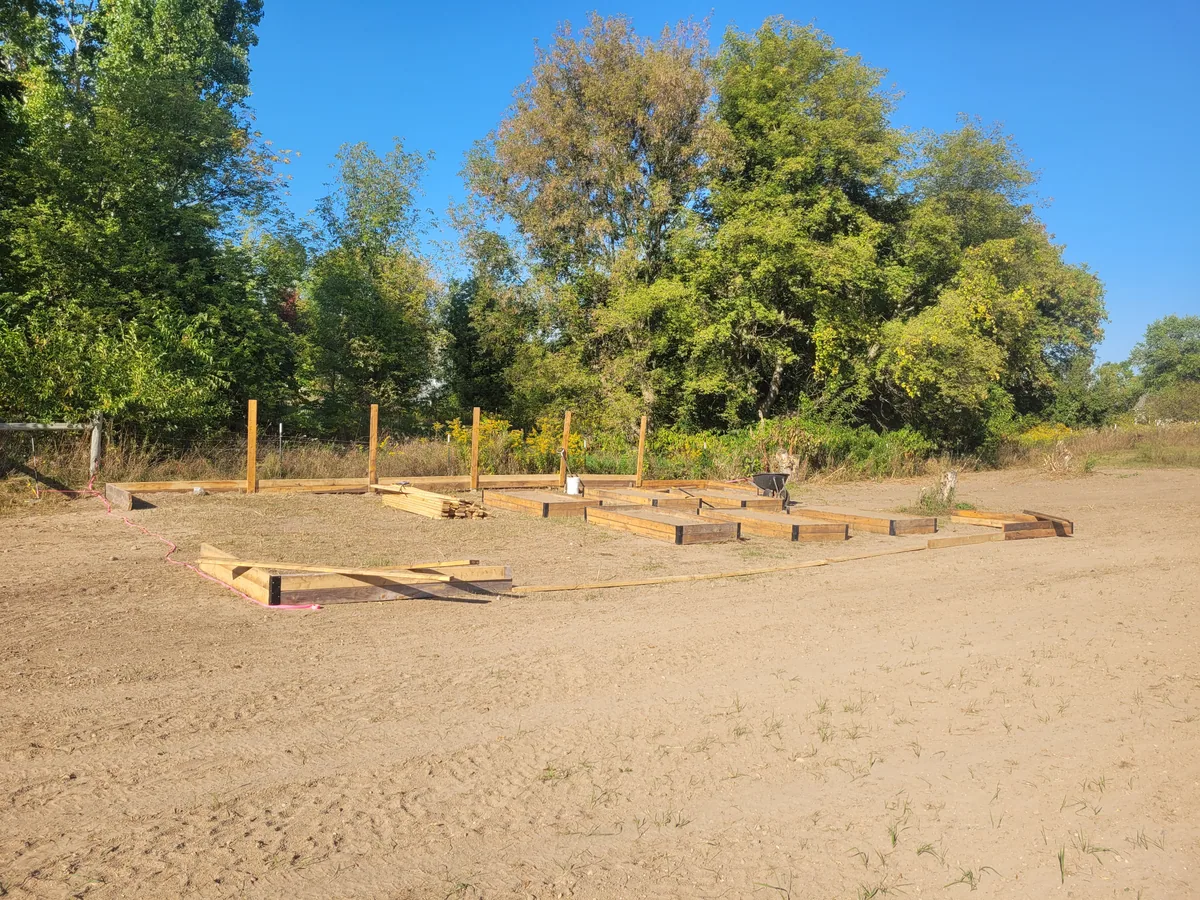
An empty garden makes every decision visible. The beds have edges, the posts have intervals, and the paths are still broad stretches of bare ground. There is no planting to soften a narrow passage or distract from an awkward corner.
In this view of Idlewind Acres, low wooden frames mark out the growing space. Taller posts suggest the enclosure around it. Behind them, mature trees give the new work an established backdrop.
The spaces between
The beds are the obvious subject, but the gaps deserve just as much attention. They determine how the garden will feel to walk through, where the eye will travel, and how each part will relate to the next.
This stage has its own appeal. A garden usually appears in photographs after the planting has filled out. Here, the layout is still legible. It is possible to see the project as a set of decisions rather than a finished scene.
The straight timber sits against the irregular shapes of the trees. That relationship is already doing useful visual work. The garden can acquire flowers, climbing growth, and all the small things that accumulate around a project; its underlying arrangement is present from the start.
Keep a photograph of the empty beds. Later, it will be harder to remember just how much space there was between those first lines of wood.